“You didn’t lose your baby… there’s two in there.” I could hardly process the words as they floated above me while I lay in a hospital bed, fearing I was miscarrying our second child. My husband and I had just discovered we were expecting in December, and by January, sharp abdominal pains with every deep breath had me terrified. On January 16, 2021, I went to the ER after work, bracing for the worst. I told them I thought it could be a miscarriage or an ectopic pregnancy. Never in my wildest dreams did I imagine the doctors would walk in and tell me I was carrying twins.
My husband stayed in the car with our 2-year-old, so I sent him a simple text: “It’s not bad news.” He replied jokingly, “Haha, TWINS??” I sent back a plain, calm “Yes,” but inside, my heart was racing with excitement and disbelief. That night, the reality settled in: our love story had twins in it. Neither of our families had twins before, and suddenly, our ordinary world felt extraordinary. We began brainstorming names and secretly hoping for a boy and a girl.
Our first prenatal appointment at six weeks brought more anxiety than relief. The ER had sent over my medical records, which noted uncertainty about the type of twins, but our OBGYN brushed it off and performed only a welcome exam, scheduling our first ultrasound for 12 weeks. Waiting six more weeks felt torturous—especially with my history of high-risk pregnancy, including gestational diabetes, thyroid issues, and hypertension. My mind raced with scenarios: fraternal twins (di/di) with separate placentas and sacs, identical twins (mo/di) sharing a placenta but separated by a membrane, or mo/mo twins sharing a placenta without separation. The thought that our OBGYN might miss this crucial detail sent me down an anxious spiral.
At 12 weeks, my husband and I showed up for our ultrasound only to find it had been canceled. My knees went weak, and nausea hit like a wave. I stared the receptionist in the eye and insisted we would not leave without an ultrasound. Miraculously, they were able to fit us in. Seeing both babies on the screen, healthy and growing, was thrilling—but the membrane remained elusive. Two techs searched, unsure whether it existed. It was still too early to tell.
When we finally met with our doctor, I was referred to a high-risk specialist in addition to my regular OBGYN care. That was the moment I realized this journey would be intense. Over the next weeks, we were monitored closely by both doctors. They confirmed our twins were mo/di—sharing a placenta but separated by a membrane—a small relief, knowing the babies wouldn’t risk cord entanglement.
Monitoring continued: our OBGYN checked fluid levels to ensure proper nutrition for each twin, while the high-risk specialist tracked anatomy changes, such as the bladder. At 16 weeks, we discovered they were both girls—just as I had hoped. Joy and love filled our hearts.
But at 18 weeks and 2 days, during a routine ultrasound, the room fell silent. Something seemed wrong. Our OBGYN referred us immediately to the high-risk specialist, fearing twin-to-twin transfusion syndrome (TTTS), where one twin receives too much blood, and the other too little, which can be fatal if untreated. Fear gripped me. We had thought the worst of early pregnancy was behind us, but suddenly, danger loomed again.
Three days later, the high-risk doctor diagnosed selective intrauterine growth restriction (SIUGR) for Baby B, meaning she wasn’t receiving enough nutrients from the placenta. Her umbilical cord was marginally inserted, adding to the risk. There was nothing to do but wait and hope. I spent days on semi-bed rest, constantly checking for movement, desperate to know they were both alive.

Routine ultrasounds every two weeks showed small victories and setbacks. At 20 weeks, Baby B was a week behind but stable. By 22 weeks, her bladder disappeared, fluid levels dropped, and TTTS fears returned. We were referred to Cincinnati Children’s Hospital, undergoing hours of scans and echocardiograms. Fortunately, TTTS was ruled out, but the underlying concerns remained. Gestational diabetes contributed to these issues, and I immediately began monitoring my blood sugar, adjusting my diet, and eventually starting insulin.
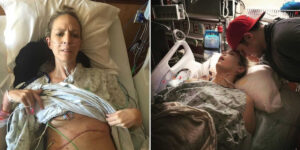
By 24 weeks, Baby B’s umbilical cord showed absent end-diastolic flow—moments with no blood reaching her. My heart sank. The doctor warned hospitalization was imminent. At 26 weeks and 4 days, that day came. Admitted to a hospital with a level 4 NICU, I received steroids and prepared for the possibility of early delivery. The days in the hospital were agonizing—confined, masked, and under constant monitoring. NSTs and ultrasounds became a rhythm of anxiety and hope.
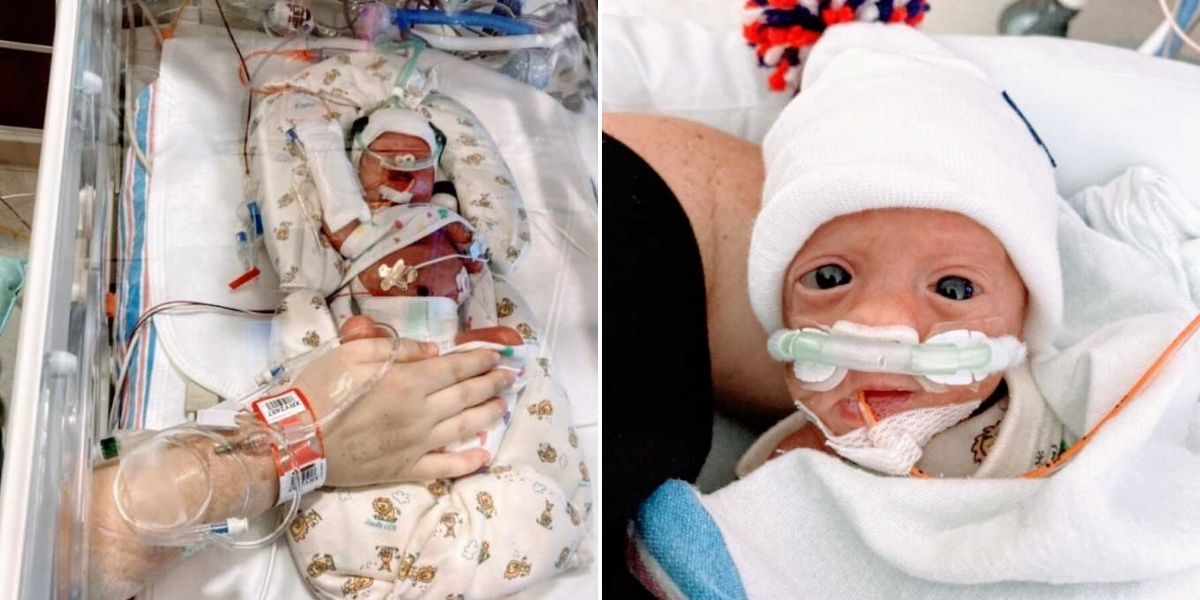
At 27 weeks and 3 days, I was readmitted. Tears fell freely; I missed home, my husband, my son, my dogs. But strength prevailed. My babies needed me. Over endless ultrasounds and NSTs, we clung to hope. At 28 weeks and 1 day, a critical ultrasound showed reversed blood flow in Baby B’s cord. Emergency C-section followed. At 11:10 and 11:11 a.m., our daughters entered the world. Both were whisked to the NICU; my husband followed. They were stable. I finally saw them later that day, fragile and perfect.
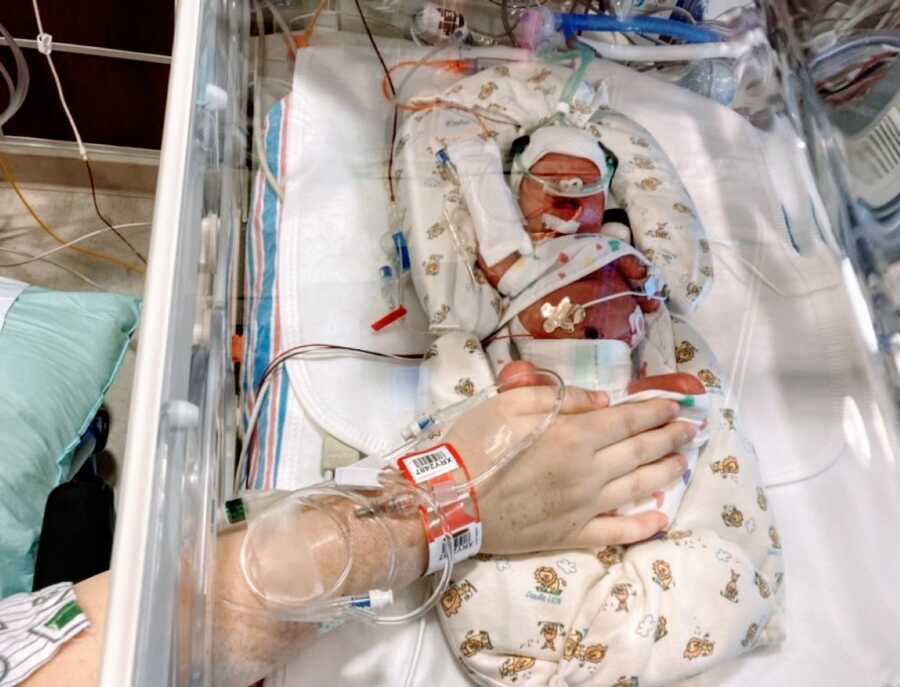
Baby A, Eliza Clarke, weighed 2 pounds 8 ounces. An IV complication temporarily cut circulation to her foot, but it healed fully within a week. Baby B, Octavia Marie, weighed 1 pound 14 ounces and stabilized without complications. Both required CPAP support, but neither needed long-term IVs. The fear of preterm complications hovered, but each day brought small miracles.
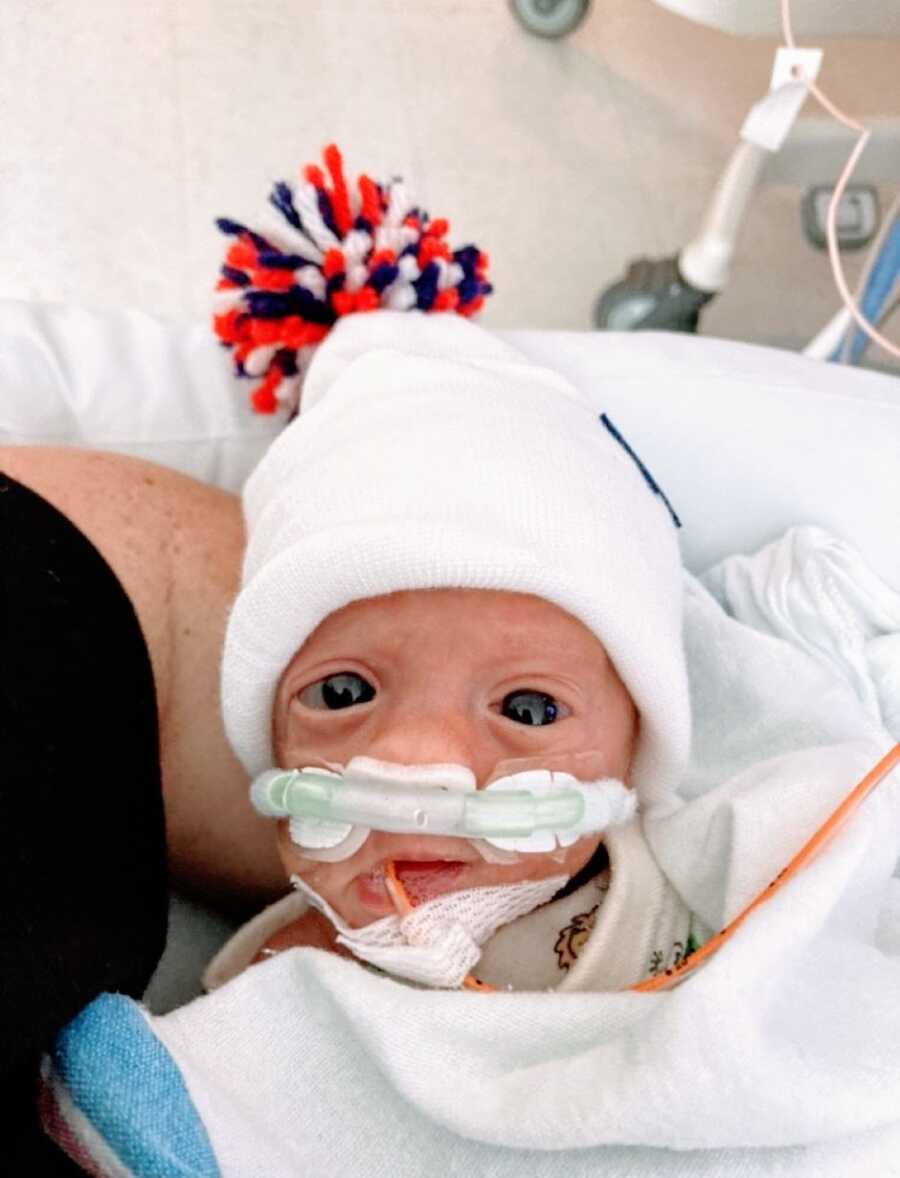
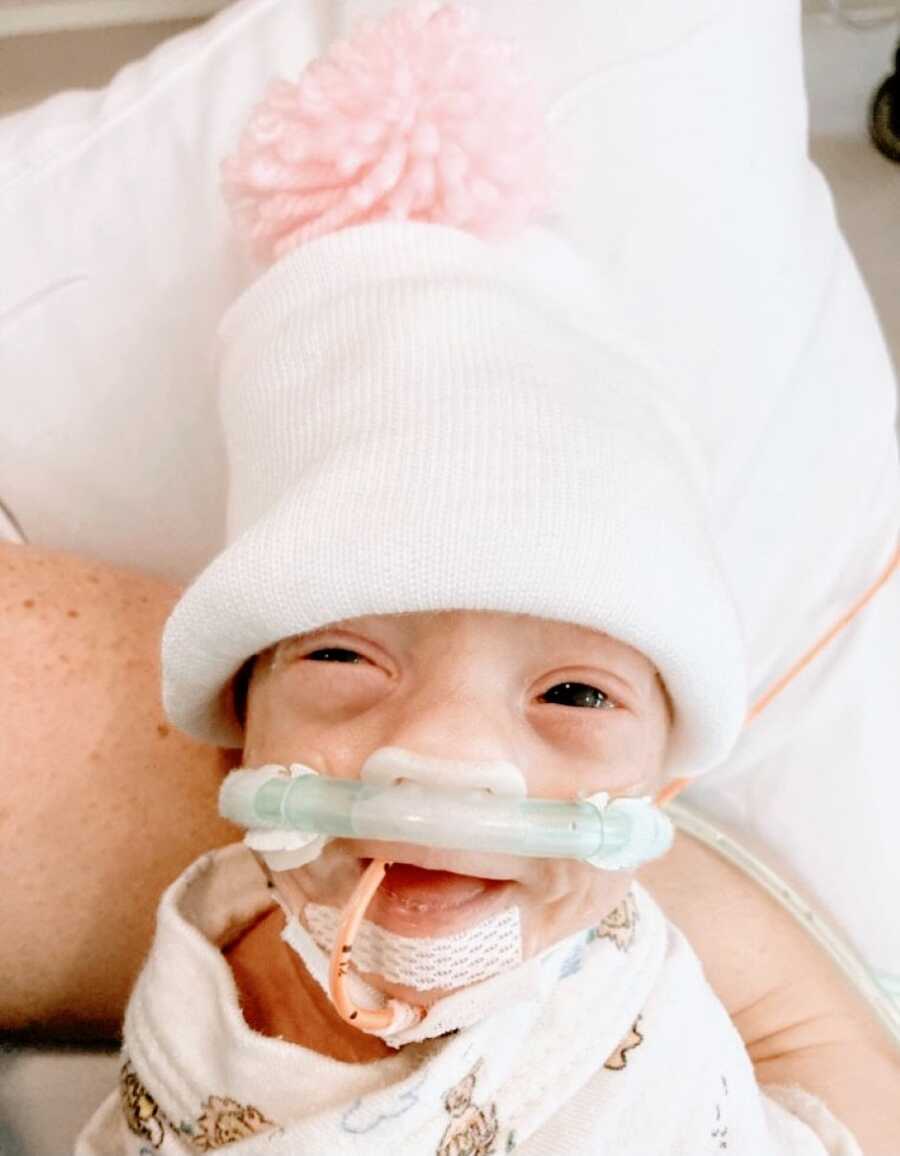
After two days at home, we began nightly visits to the NICU. At 12 days old, we held them for the first time. The feeling was indescribable—our tiny girls on our chests, their warmth filling the void of weeks of anxiety. The nurses’ care was unmatched; their advocacy made all the difference.
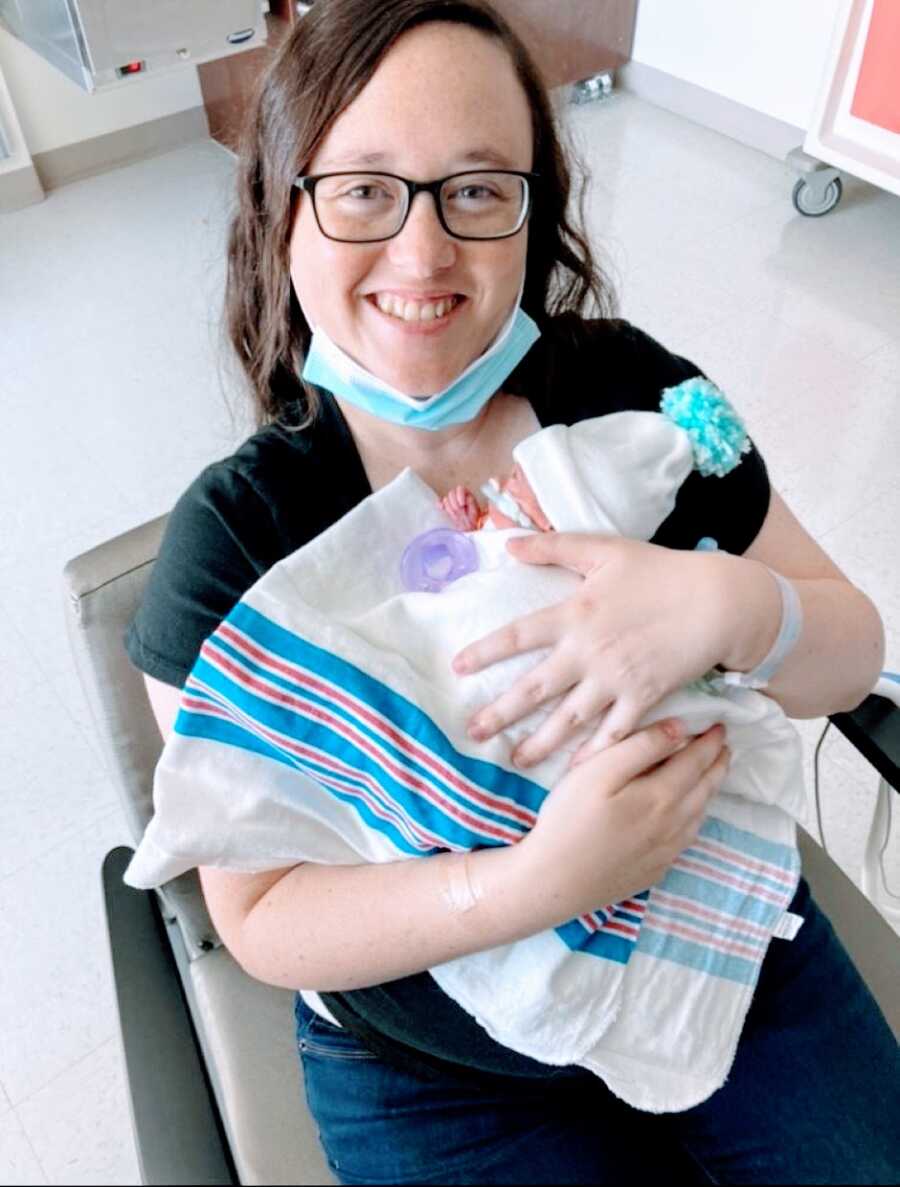
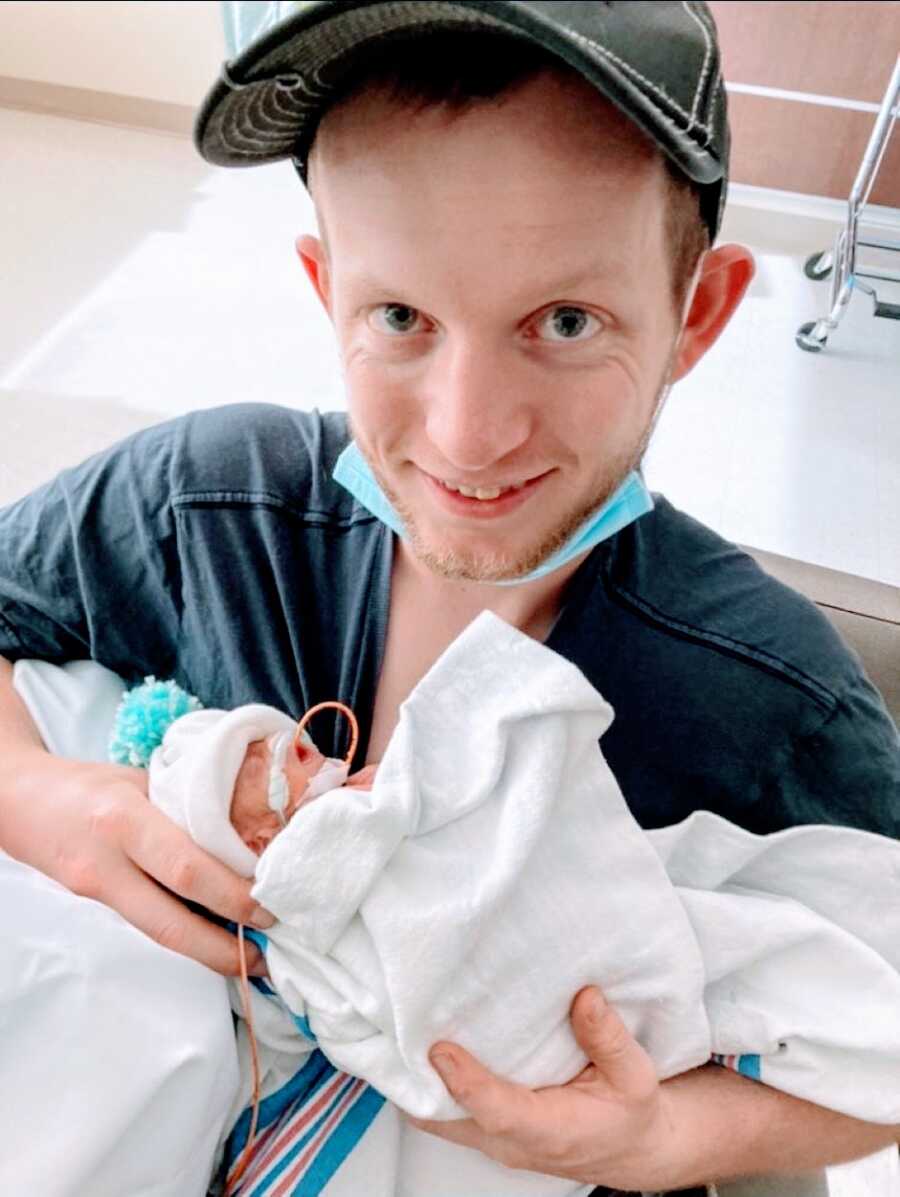
Eliza came home after 53 days, and Octavia followed 10 days later, after regaining feeding consistency with the help of a familiar NICU nurse. At 63 days, both daughters were finally home. Exhaustion met unparalleled joy.
Our pregnancy and NICU journey will forever be etched in my memory—a testament to perseverance, love, and the extraordinary care of the nurses who made it all possible. Weeks into life at home, our hearts are full. Though we are tired, we are overwhelmingly grateful. Our twins, once so fragile, are finally safe, thriving, and complete our family in the most miraculous way.