When I was younger, people often thought I was purposely ignoring them. Some would jokingly say it was selective hearing. I can’t completely dismiss that theory—after all, it’s pretty normal for young kids to tune things out sometimes. But most of the time, I simply couldn’t hear, especially if the person speaking wasn’t in the same room. My speech wasn’t perfect, but it wasn’t bad either. I think the main reason I could speak so well was that I taught myself to lip read from an early age.
Whenever someone talked to me, I would say “what?” or “huh?” a lot. It wasn’t that I didn’t know they were speaking—it was that the sounds were muffled or the words weren’t clear. The easiest way I’ve found to explain it to others is this: it was like people were whispering all the time. I could catch fragments of words here and there, but without lip reading, I often couldn’t distinguish the full message.
My mom suspected something was off when I was just two years old. I would sleep right through a stereo blaring music, while my three-year-old brother would always wake up. I rarely reacted when things fell on the floor. Despite her concerns, my pediatrician repeatedly gave me hearing tests, and I always passed them. It turns out I had figured out the rhythm of the tests, and with a little help from the tester, I could respond correctly every time. In kindergarten, my teacher finally recommended a specialist, which led my mom to take me to the children’s hospital. That’s when I failed a hearing test and learned I had sensorineural hearing loss—a type caused by damage to the inner ear or the nerves connecting the ear to the brain. Mine was congenital, meaning I was born with it.
I vividly remember my audiologist explaining my hearing loss in a way a five-year-old could understand. She had a poster on the wall of the ear and pointed to each part as she described it. She explained that tiny hairs in the ear pick up sound and send it to the cochlea, which then transmits the sound to the brain. In my case, the cochlea hairs were either damaged or insufficient. At the time, I didn’t see my hearing loss as a problem, and honestly, I still don’t. I’ve always felt it’s just the way God made me. There was a small sense of relief when we confirmed the diagnosis—hearing aids could help, and there was finally proof that I hadn’t been intentionally ignoring people. I did end up repeating kindergarten, but it was a small price for understanding myself better.
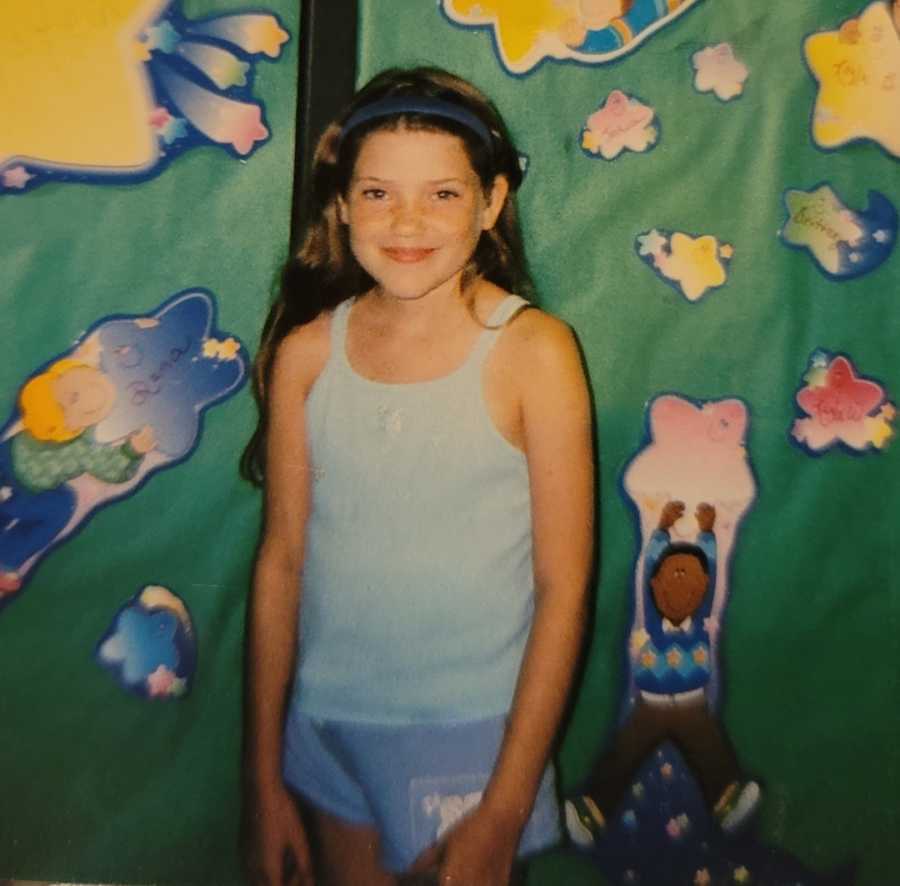
In middle school, I met a teacher who taught me Sign Language. I was pulled from my English/Reading class to attend her lessons, which initially frustrated me because reading had always been my favorite thing to do. I vaguely remember telling her I didn’t need to sign because I could hear and talk. Looking back, I can’t believe I said that—but I was trying to live in denial. Admitting my hearing loss meant more attention and, potentially, more social isolation. I hoped speech therapy and an FM system would be enough. Kids can be cruel, and I wanted to keep my head down.
That class, however, introduced me to a community I didn’t even know existed. I hadn’t met anyone else my age with hearing loss and had never had interpreters in elementary school. I was new to the Deaf world. Despite my initial reluctance, learning Sign Language became a gift. It connected me to a world I hadn’t known I needed, and I’ve carried it with me ever since. I still feel a twinge of regret for that early denial—my comment was a judgment on the Deaf/HoH community that I didn’t even realize I was making.
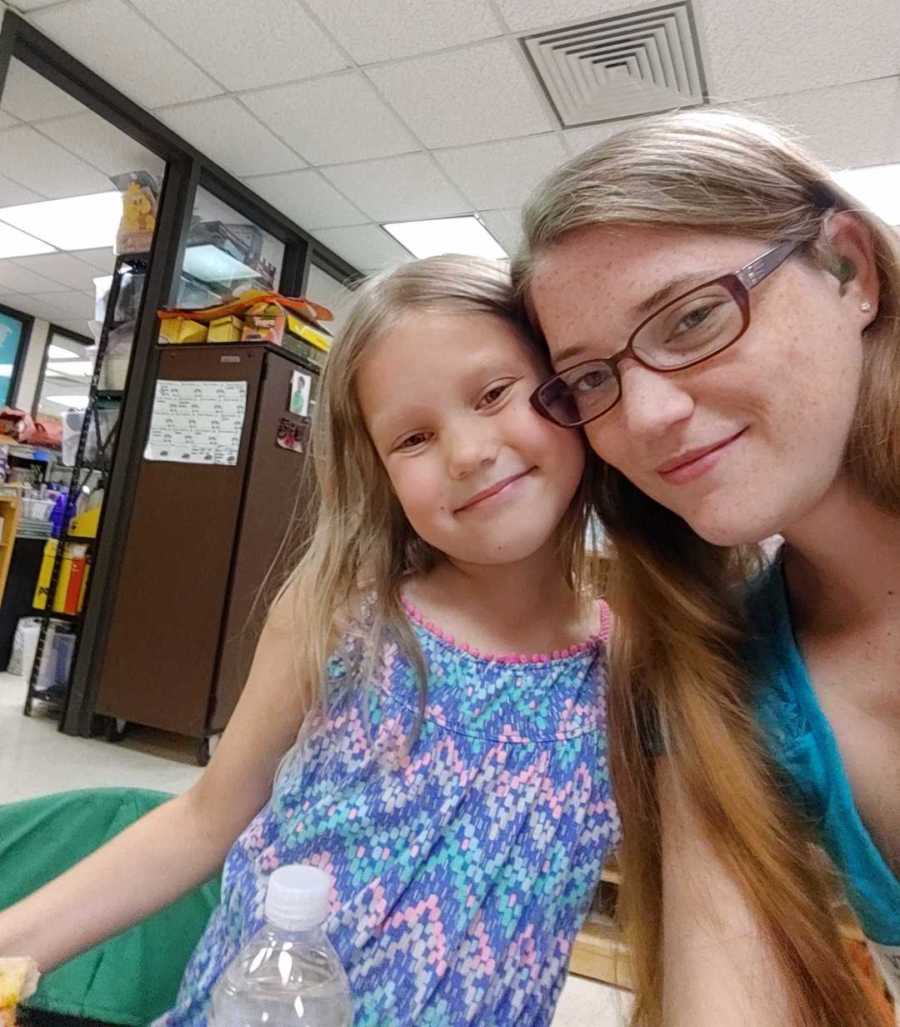
Sign Language has become invaluable as a parent, especially with my daughter, Liana. Summer brings oceans, pools, and water slides—times when we can’t wear our hearing aids. Most of the time, she’s the only person I can communicate with in those moments. Some friends and family know a few signs, but Liana isn’t shy correcting them when they’re wrong. Group conversations, vacations, or noisy environments can still be overwhelming. Sometimes I nod along, pretending I understand, because trying to follow everything in a crowded room can be sensory overload. People might misinterpret it as rudeness, but it’s just a coping mechanism I developed over the years.
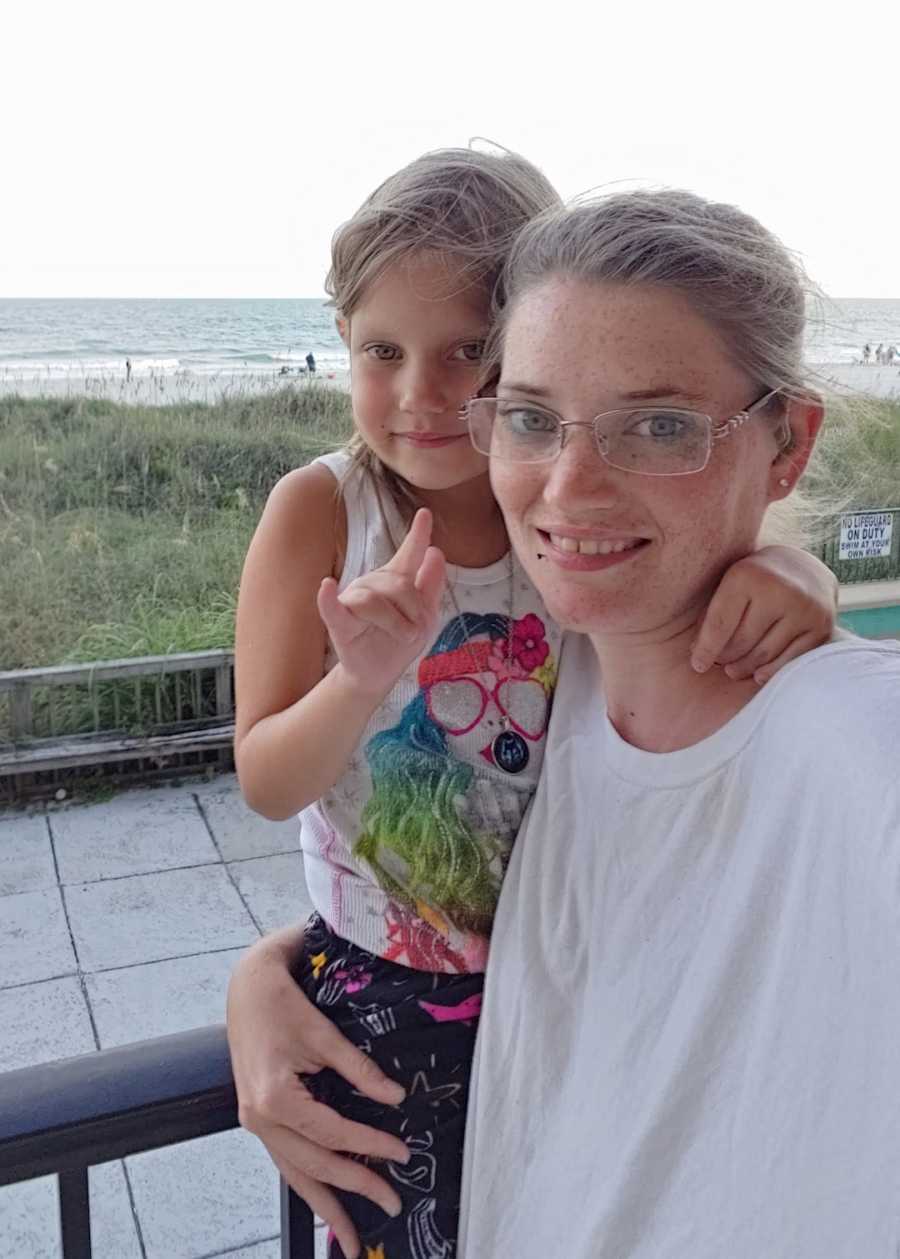
Identifying in the Deaf world can be complex. I’ve always called myself Hard of Hearing or Hearing Impaired—though I now know that “Hearing Impaired” can be offensive, implying brokenness. “Deaf” with a capital D refers to Deaf culture or those born Deaf; lowercase d refers to those who become deaf later. I feel I straddle both worlds: without my hearing aids, I’m effectively Deaf, but with them, I navigate the hearing world. Growing up, I often stayed quiet about my hearing loss because people react differently, sometimes treating you as different or even incapable.
The COVID-19 pandemic pushed me to speak up more. I bought a mask that read, “Hard of Hearing—please be patient.” At the movies, an attendant noticed and offered an assisted listening device I didn’t even know existed. I realized then that not advocating for myself sometimes made me miss out on things. Many people still assume speaking louder or slower helps, but it’s not about volume—it’s about clarity and pacing. Lipreading works best when people speak naturally, without exaggerated pauses.
I’ve had experiences that reminded me of these challenges firsthand. One day, after a fall that required stitches, the nurse leaned in and spoke directly into my ear. While well-intentioned, it frustrated me—if someone doesn’t know how to sign, we still need to see their mouth to read lips properly. This extra effort is a daily reality for Hard of Hearing and Deaf people, yet most hearing individuals have no idea what we go through.
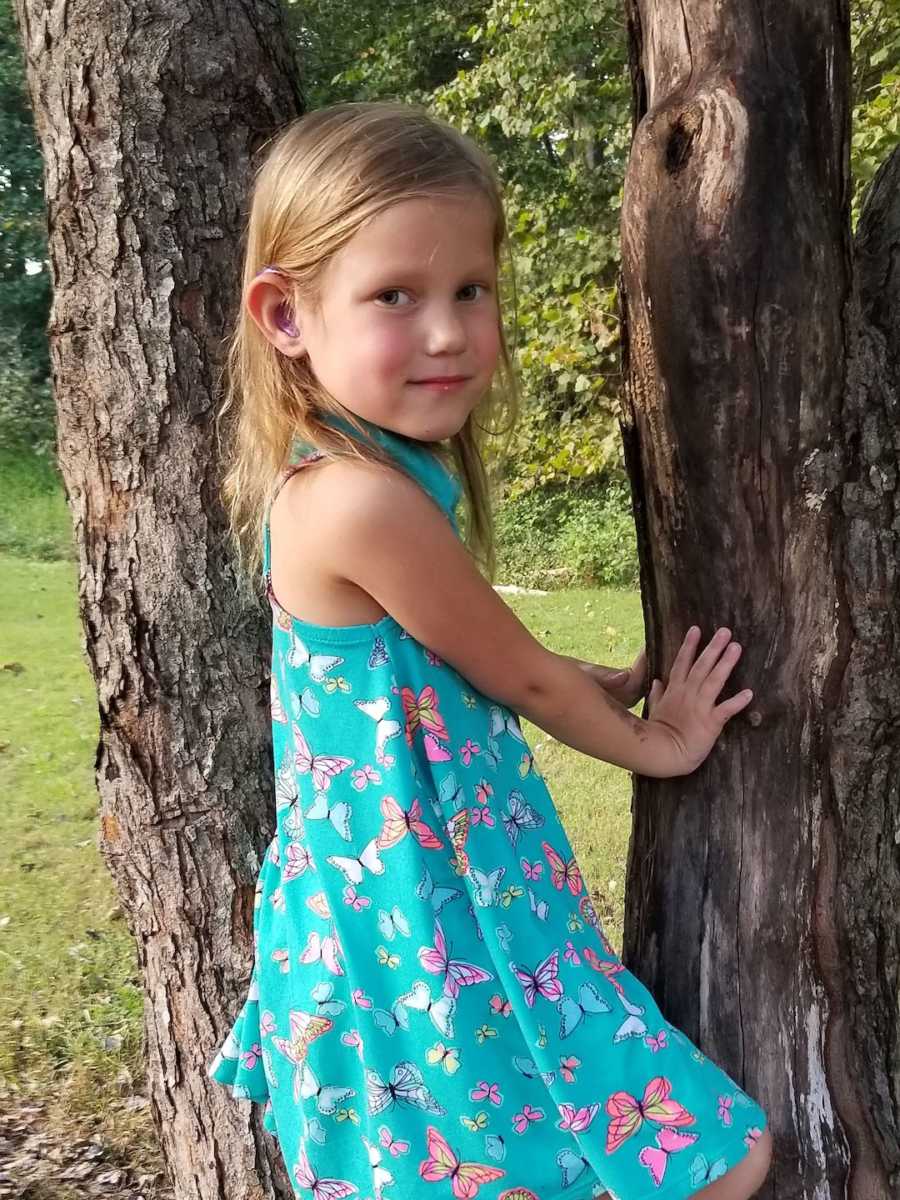
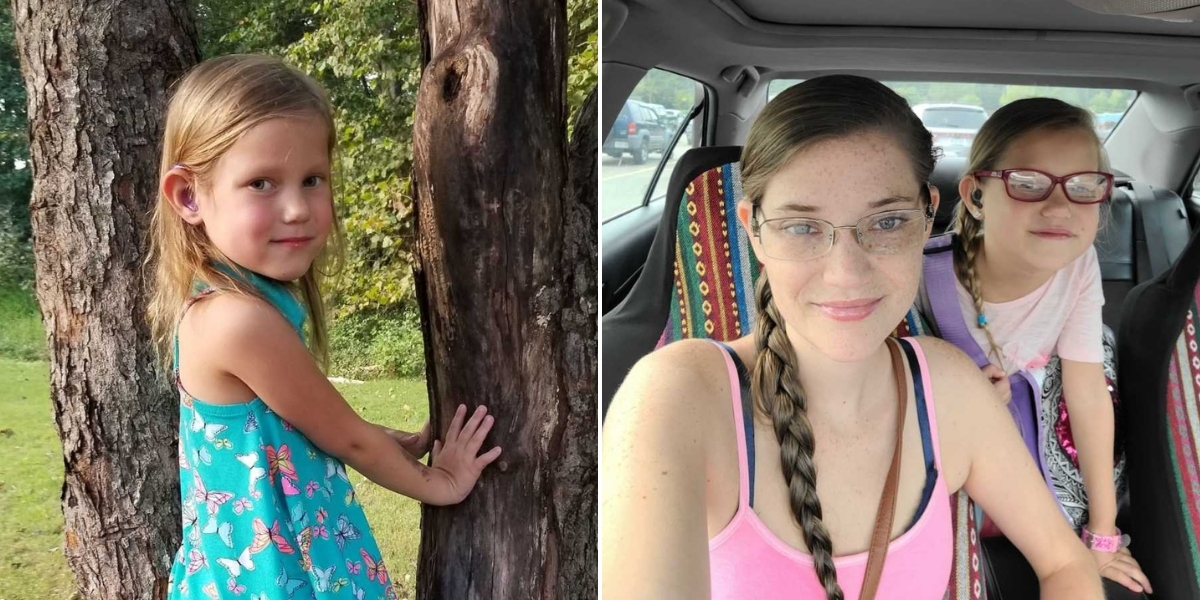
Liana was diagnosed at age two. She had passed her newborn hearing test, but a bedtime game of hide-and-seek revealed her hearing loss. She didn’t react when my fiancé jumped out and screamed, so we knew it was time for further testing. The Auditory Brainstem Response test showed she had moderately severe to profound hearing loss, and she needed hearing aids. While doctors couldn’t confirm heredity at first, research shows a percentage of sensorineural hearing loss is hereditary. Knowing this, I wasn’t worried—her path could be different from mine, but she would be okay.
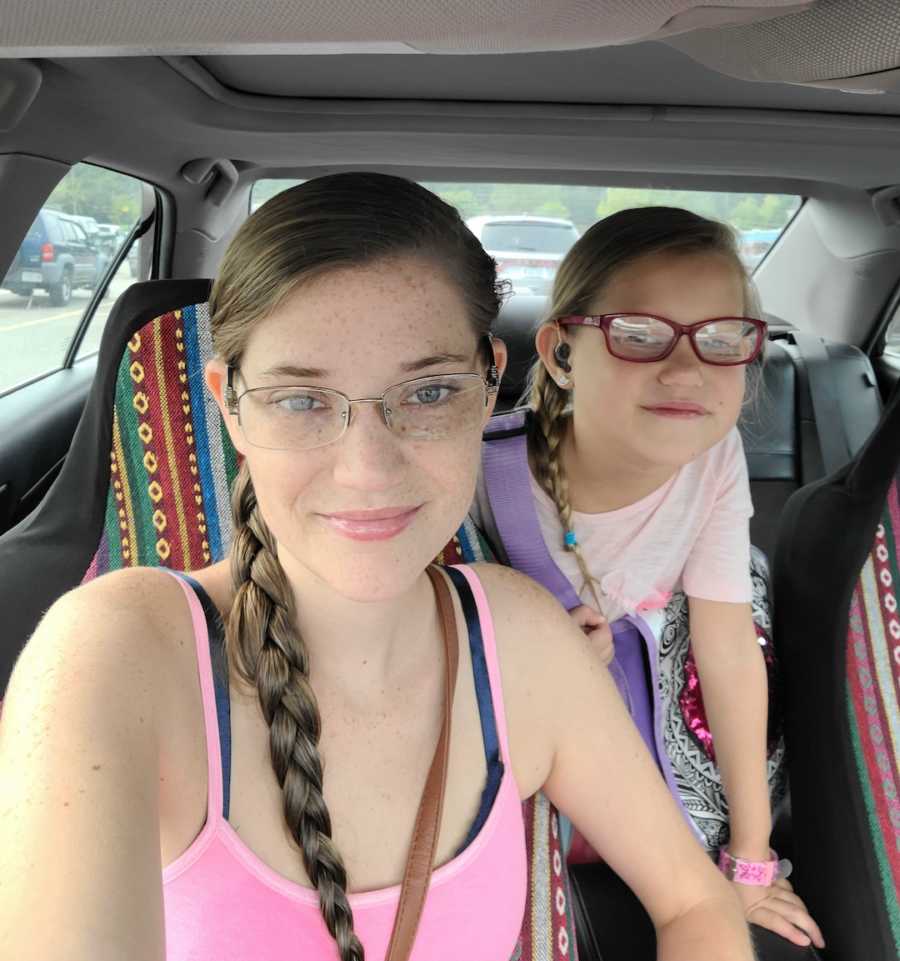
When Liana got her hearing aids, she was sitting in her Memaw’s lap. The audiologist placed the aids in her ears, and everyone exclaimed that she had “ears like mama.” Liana echoed the words, showing off her new hearing with pride. She’s also a candidate for cochlear implants, like me. While some thrive with implants and others don’t, I’ve chosen not to get one. For Liana, I believe the choice should be hers.
Her early childhood education program, which introduced her to Sign Language, has been life-changing. She’s technically learning three languages at once: spoken English, American Sign Language, and Sign Exact English, which helps with reading. She often prefers signs over spoken English, which sometimes makes it challenging for me to convey certain concepts. I experiment with pictures, videos, and physical demonstrations, and sometimes we just have to try again later. Teaching her is both rewarding and frustrating—it reminds me how similar our experiences really are.
Hearing aids are expensive, a reality that affected my mom when I was a child. Because we didn’t qualify for Medicaid, she often had to take out loans or rely on my Granny’s help. Insurance rarely covers more than half of ear molds, and devices can cost $4,000 to $8,000 each, with replacements every five years. It’s difficult, and it shouldn’t be this way. Parents shouldn’t have to struggle to give their children the gift of hearing.
I want other parents of kids with hearing loss to know this: it can be challenging, frustrating, and exhausting. Sometimes it feels like nothing you do is enough, but showing up consistently, asking for help, and researching available resources can make all the difference. You’re not alone, and your efforts matter.