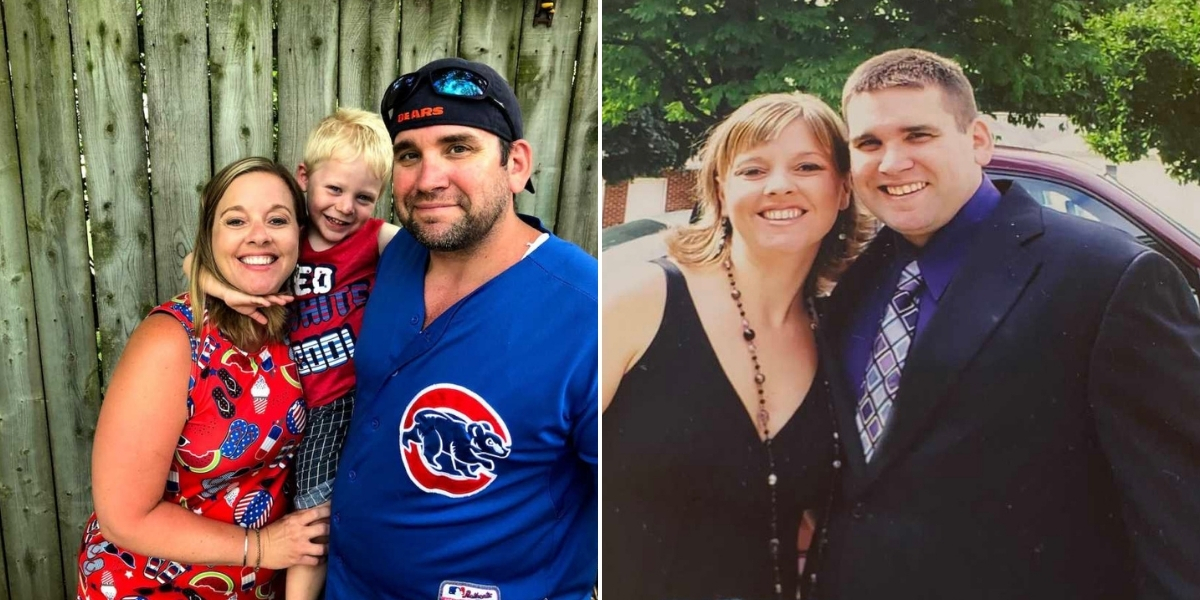
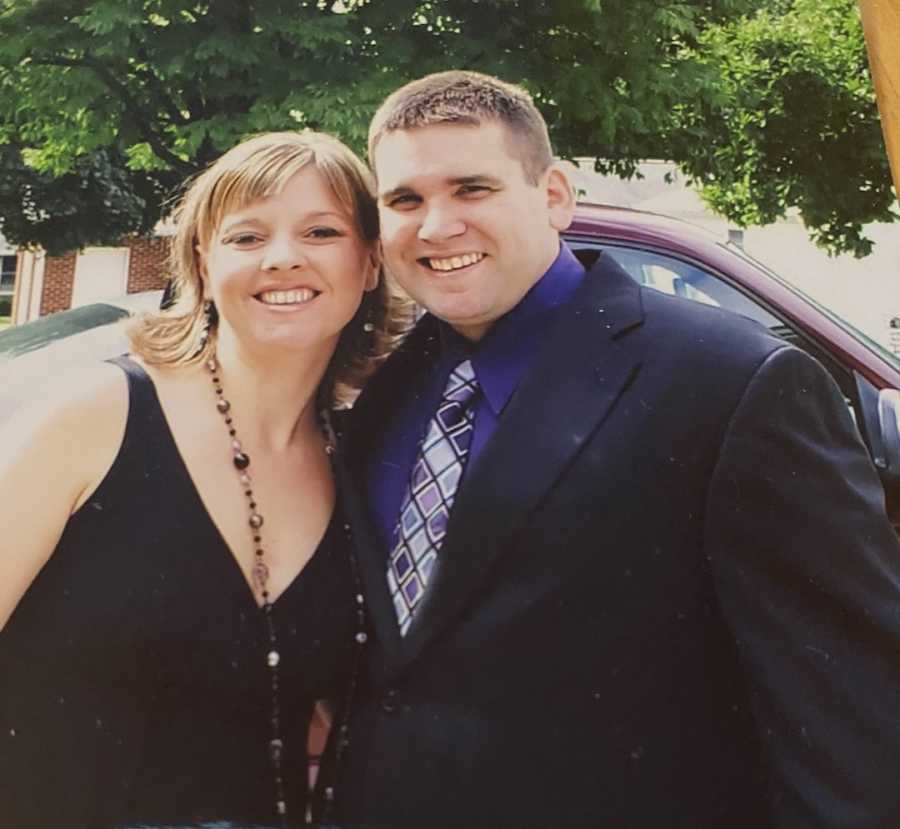
Mike and I had been married for three years when we decided to start a family in 2010. I was 32, and he was 31. Starting a family in our early thirties didn’t feel late to us—we still felt young and full of time. One thing you should know about me is that I am a planner. In my mind, if we had our first baby at 32, we’d be finished growing our family by the time I was 35 or 36. That was the plan, at least.
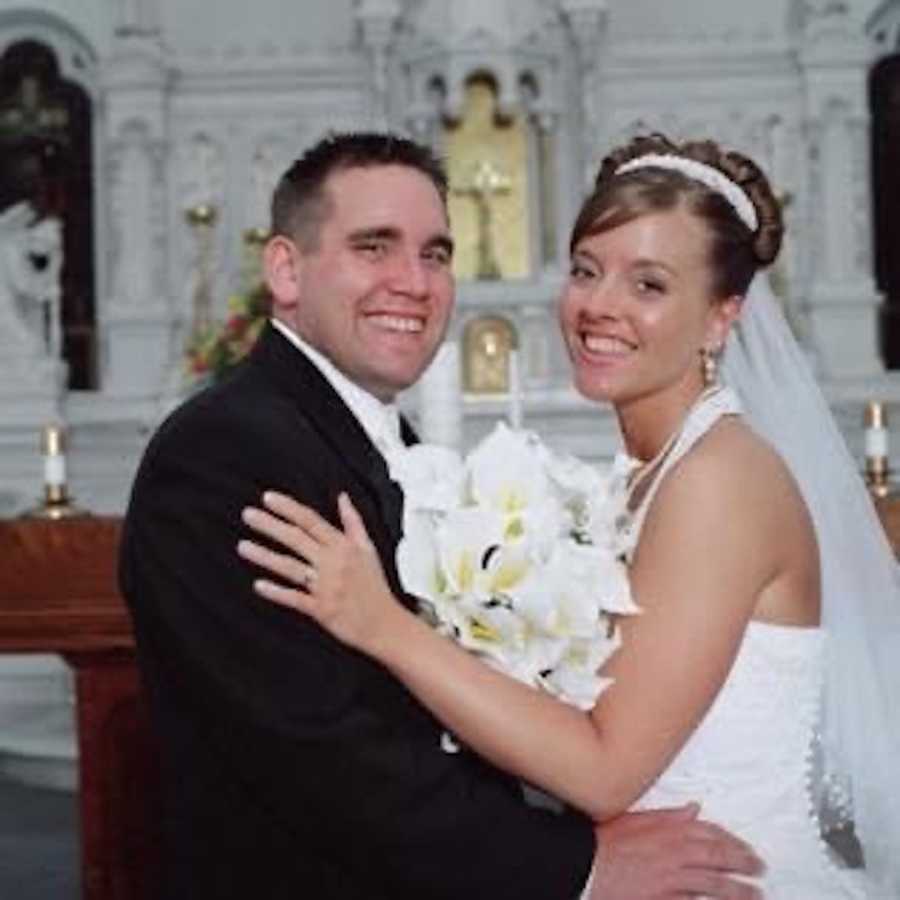
By 2011, there was still no baby. In the fall of that year, Mike and I attended one of his friend’s weddings. I was sitting with the other wives when someone casually asked if we planned to have kids. I replied that we had been trying since the summer of 2010. She gently suggested we consider seeing a specialist. After some thought, Mike and I decided to wait until after Christmas to reach out to an infertility doctor.
A few days after Christmas in 2011, I called Midwest Fertility Specialists. I remember crying while scheduling the appointment, shocked that we were even at this point. The first available appointment wasn’t until April 2012, though we were placed on a cancellation list. Four months may not sound long, but after a year and a half of trying, it felt unbearable. Thankfully, a cancellation opened up in February. Around that time, we briefly thought I might be pregnant. Our doctor told me to take a test—I wasn’t. Testing revealed that Mike had fertility issues, while I did not.
After four failed cycles of Clomid and four failed intrauterine inseminations—our doctor followed a “rule of four”—we moved on in 2013 to IVF, the most invasive and expensive option. We were scared and heartbroken, but hopeful. I began hormone treatments, and at my very first monitoring appointment, we learned my AMH levels were low. I didn’t have the egg quality of a 34-year-old; I had the egg quality of a 40-year-old. We completed three IVF cycles through a package that guaranteed a refund if I didn’t get pregnant. I didn’t, and we received the refund.
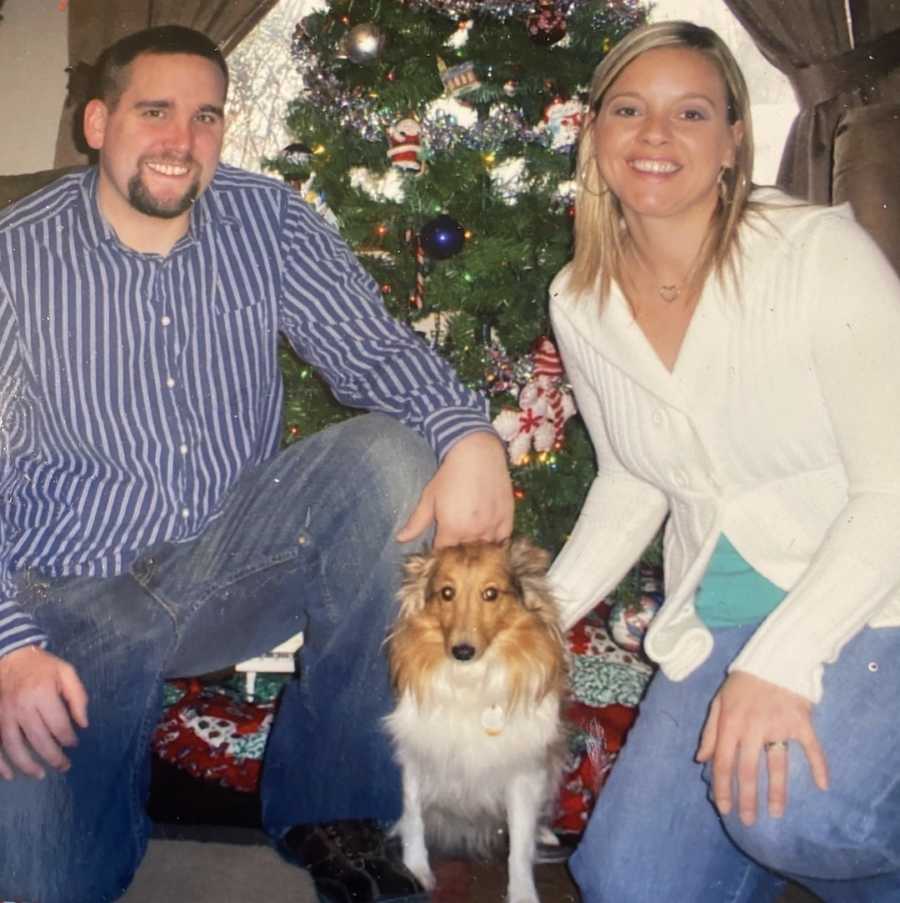
Next, we made the difficult decision to pursue IVF with donor eggs. We chose a donor who resembled me as both a child and an adult. On our third and final donor egg cycle, I finally became pregnant. November 23, 2015, was one of the longest days of my life. Mike always took off work for post-transfer blood draw days so we could be together. Usually, a nurse called with results, but that day, the call came after 5 p.m.—and it was our doctor. He told us I was pregnant and my HCG levels were very high. For the first time in years, we felt pure joy.
In December 2015, we had our first ultrasound. I was pregnant with twins. Baby A had no heartbeat. Baby B had no heartbeat. After four years at Midwest Fertility, the staff felt like family. The ultrasound technician cried. The doctor quietly left the room. There are no words for that level of devastation. After our sixth and final IVF cycle, we were pregnant—and then we weren’t.
My miscarriage began on Christmas Day. On December 27, the bleeding became severe, and I was terrified. My doctor instructed me to go to the ER. It was the worst ER experience of my life. When I explained I was miscarrying, the intake nurse dismissed me, sharing her own pregnancy bleeding story. The entire experience felt traumatic and invalidating.
In January 2016, Mike and I decided we were done with infertility treatment. We were emotionally exhausted, financially drained, and Mike didn’t want me on hormones anymore. Still longing for a child, we turned to adoption. After researching agencies, we chose Independent Adoption Center (IAC), drawn to their experience, role in open adoption, and sliding scale fees—important after losing so much money to infertility.
By June 2016, our home study was complete, and our profile went live. We ordered adoption pass-along cards and left them everywhere—restaurants, bulletin boards, even near pregnancy tests. One card led to a friendship with another adoptive mom who understood our grief and hope in ways few others could.
In October 2016, we connected with a potential birth mother through my sister-in-law’s workplace. She was homeless and estranged from her family. We spoke often and planned to meet, but the day before our trip, it became clear she didn’t fully understand adoption. She spoke about summer visits and ultimately decided to keep her baby. We canceled our trip, hearts heavy once again.
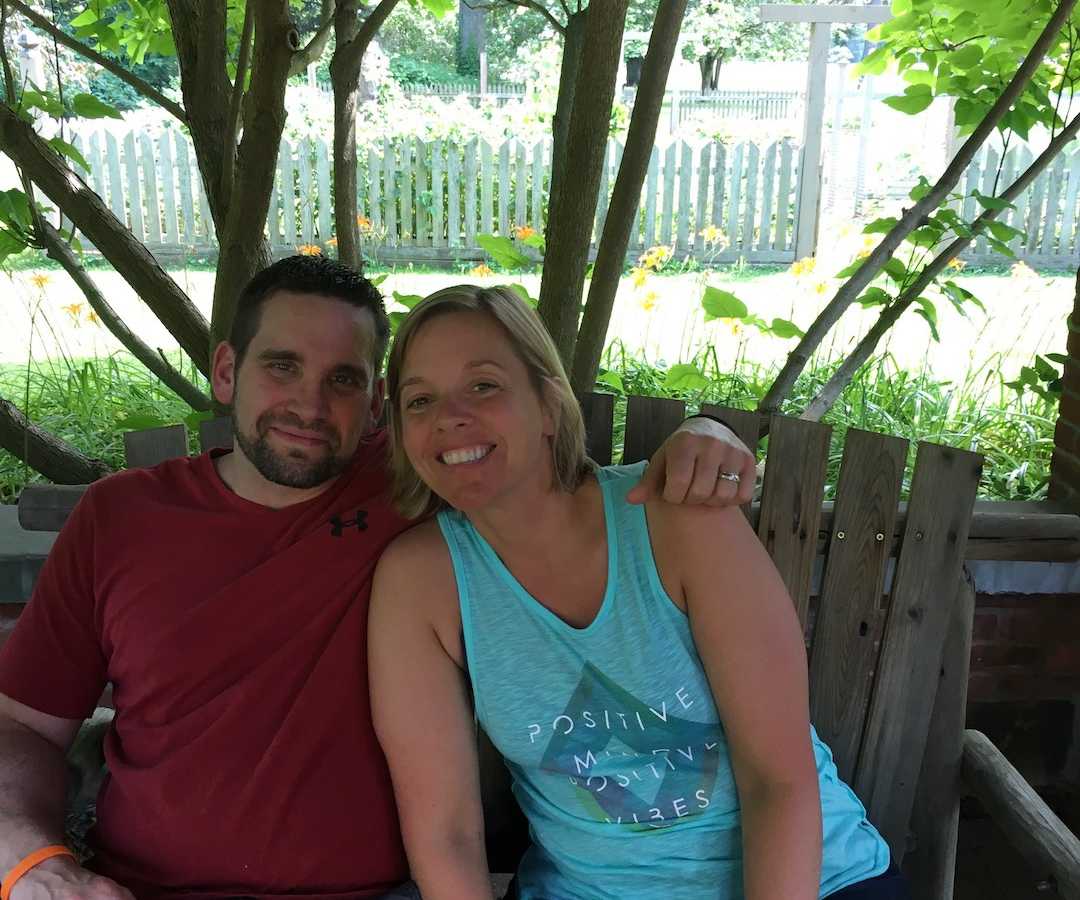
In November 2016, we shared our story through a Facebook Live video that reached 10,000 people. We truly believed this would lead us to our child. It didn’t. The silence and rejection were crushing. Becoming parents felt completely out of our control.
On January 31, 2017, we received devastating news: our adoption agency was closing and filing for bankruptcy. We had already paid $12,000. Mike and I left work early that day, overwhelmed and defeated. It honestly felt like the universe didn’t want us to be parents.
That same night, despite everything, we decided we weren’t done. We contacted Kirsh and Kirsh, a respected Indiana adoption law firm we’d previously ruled out due to cost. After everything we’d been through, we wanted our child—and ourselves—protected.
We had planned a trip to the Dominican Republic for our 10-year anniversary but canceled it to fundraise for adoption. In the end, the fundraiser didn’t happen either. Strangely, it worked out perfectly—because the day it was scheduled, we were in Indianapolis with our son.
Just four days after paying Kirsh and Kirsh’s retainer, we were contacted by a potential birth mother. We met her and officially matched soon after. Still guarded, we barely prepared. Indiana allows 24–48 hours for consent, and we had learned the hard way to protect our hearts.
I attended an ultrasound with her where she learned she was having a boy. She cried. I knew, deep down, he wasn’t meant to be ours. After Mother’s Day 2017, communication stopped. We were unmatched just before Father’s Day.
Then, on July 7, 2017, everything changed. Our attorney called about a baby born on July 5. We spoke with his birth mother, and minutes later, our attorney called back and told us to drive to Indianapolis to meet our son.
The drive felt endless. During a heavy rainstorm, we learned she had already signed consent. We were stunned.
At the hospital, we bought flowers for his birth mother and were led to the NICU. Angela and Alex greeted us warmly. After talking for a while, Angela asked if we were ready to meet him.
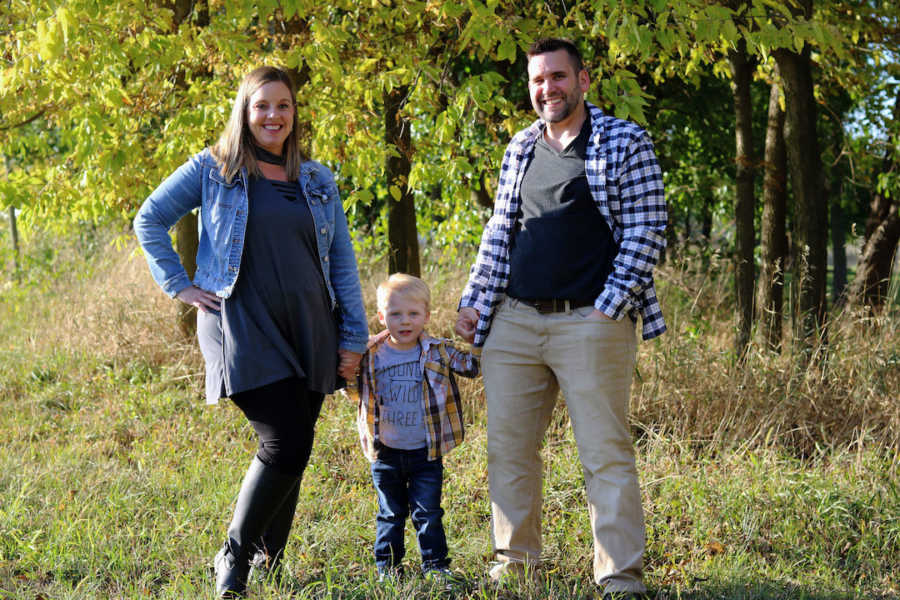
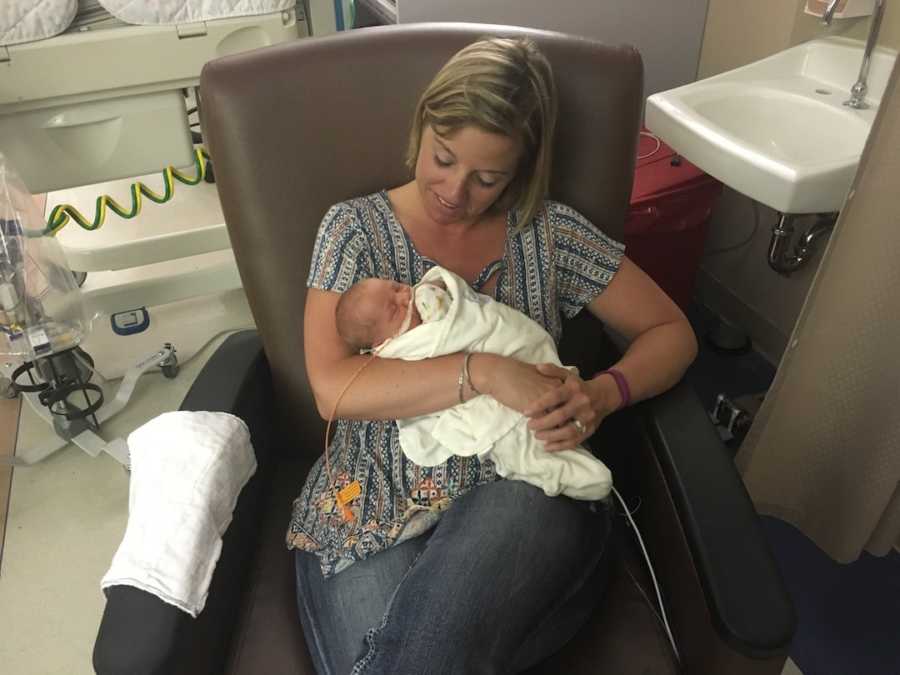
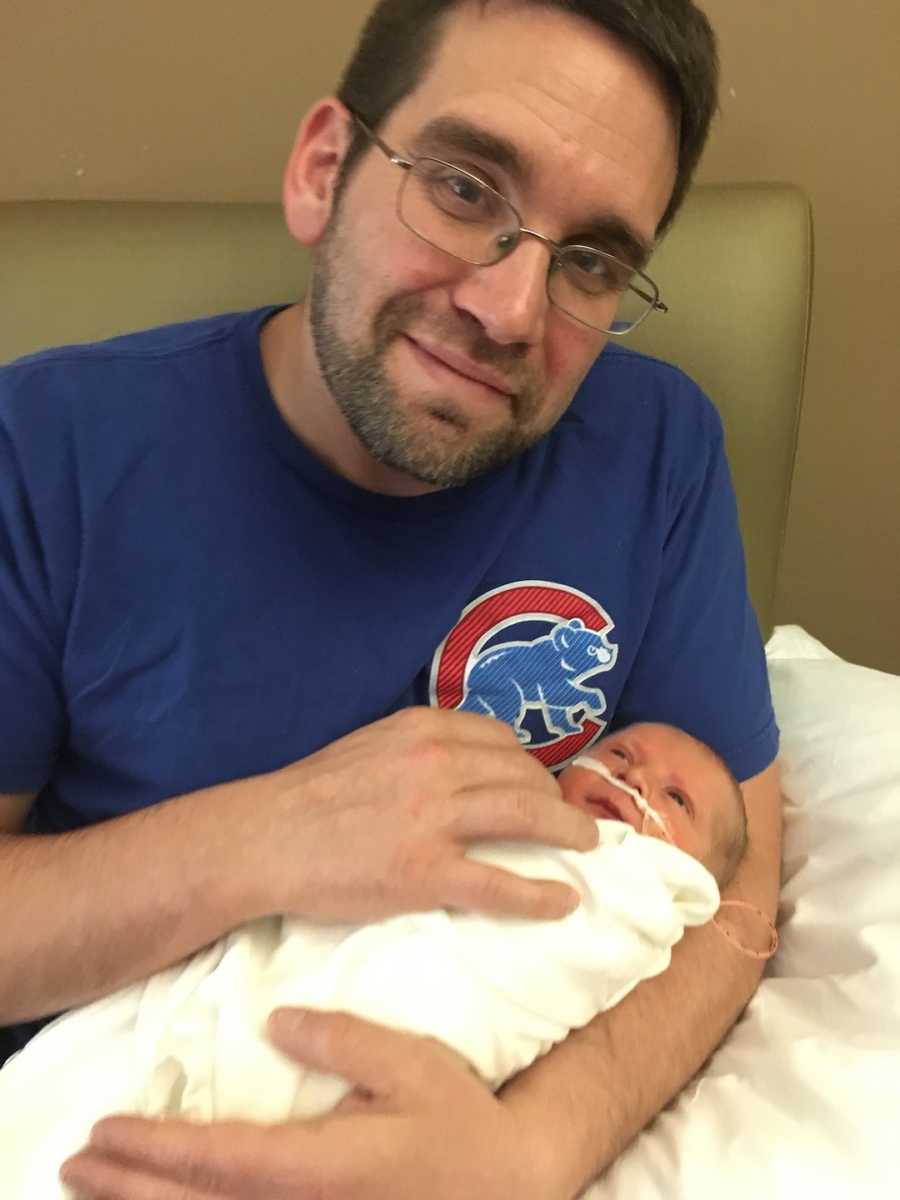
Walking into the NICU, I saw the most perfect baby boy. He was tiny, fragile, covered in wires. He weighed just five pounds. When I held him, I knew—he was my son. Angela held him one last time, tracing his soft spot, kissing him goodbye. We both cried.
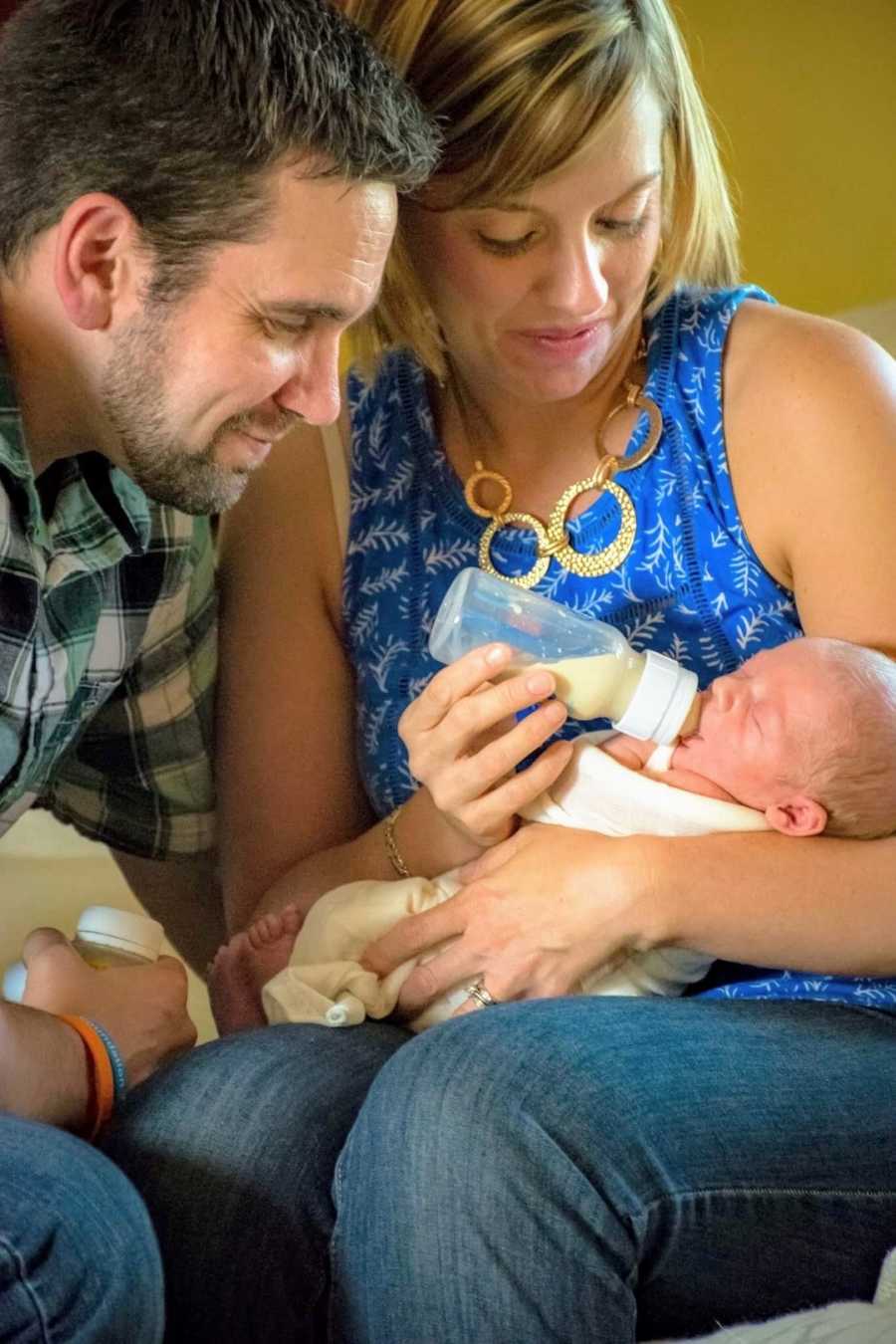
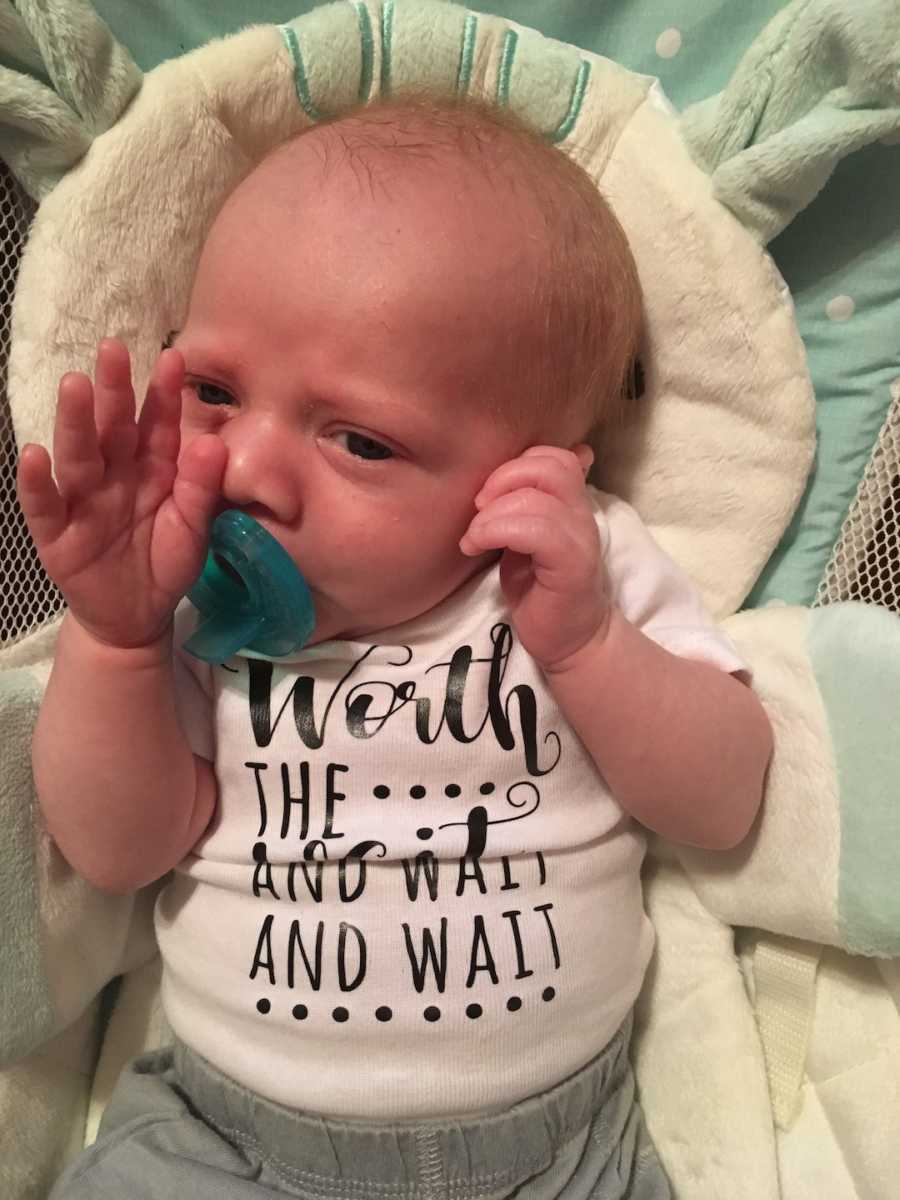
Jayce spent 11 days in the NICU. He was born addicted to methadone but passed the test that meant he wouldn’t need morphine. That time together was sacred—quiet, intimate, healing.
Coming home was a blur. We had almost nothing ready, but family and strangers alike stepped in. Gifts poured in from people who had followed our journey online. I was overwhelmed with gratitude.
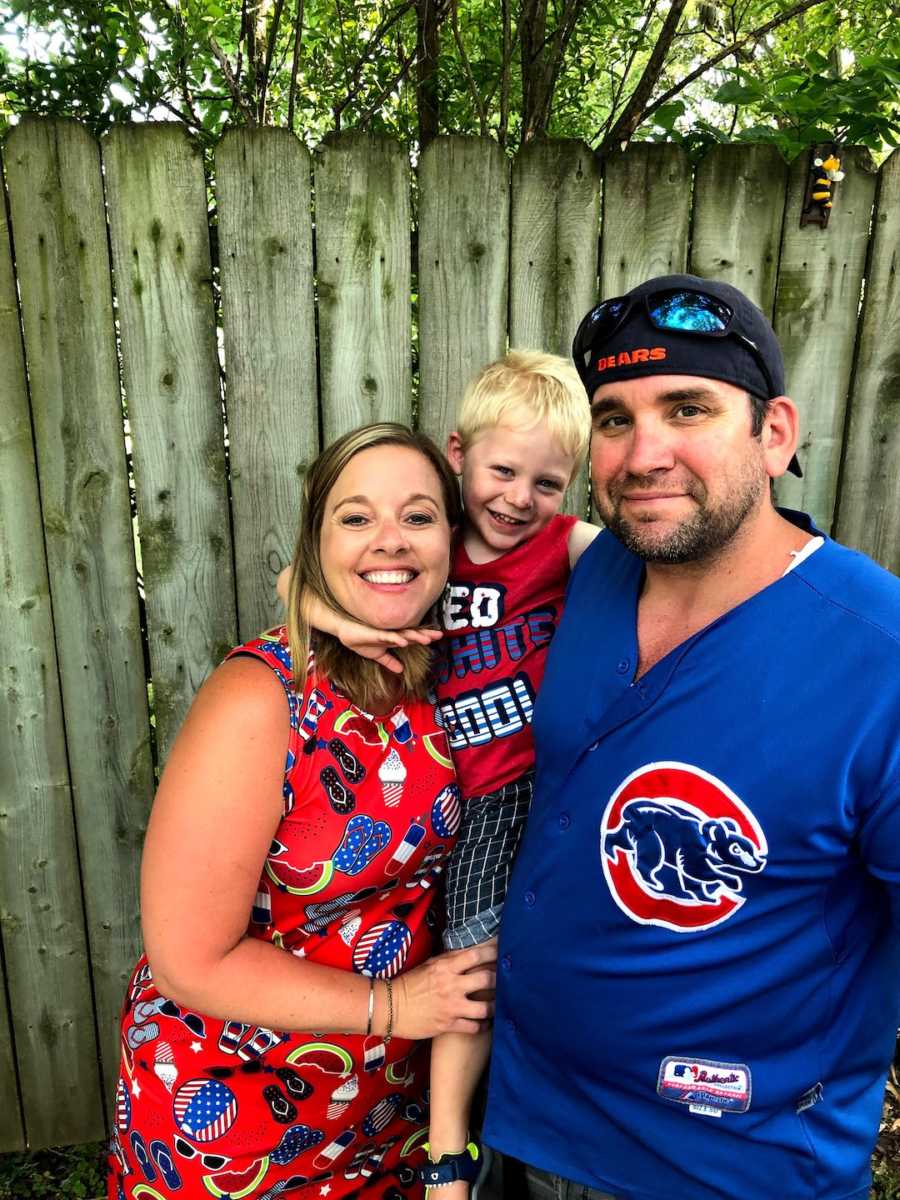
We share photos with Angela and Alex through a website. Though there is no ongoing relationship, I continue posting, hoping one day they’ll look and see how loved Jayce is.
Those seven years were filled with heartbreak, distance, and grief. Pregnancy announcements hurt deeply. We questioned everything.
Now, three and a half years later, we hope to grow our family again through adoption. If you’re struggling, please don’t lose hope—even when faith feels gone. I’ve been there. Your story isn’t over.