“I will never forget the moment the doctor looked at me and said, ‘You have ulcerative colitis, and it’s one of the worst cases I have ever seen.’
Shock. Panic. Anger. Confusion. Overwhelm. Those emotions flooded through me as I lay in a hospital bed, trying to process what I was hearing. Years of undiagnosed pain had led me to that moment, yet instead of relief, I felt painfully alone—and no closer to the answers I had been searching for.
I was 21 years old, nearing the end of my senior year of college. These were supposed to be some of the best years of my life. Instead, I felt sick every single day. Eating made me nauseous. Exhaustion followed me everywhere. Doctor after doctor couldn’t tell me what was wrong. While my friends were making memories, going out, and living carefree, I was just trying to get through each day. I missed out on so much, and eventually I even lost friendships because no one understood why I never wanted to hang out. After all, I looked fine on the outside.
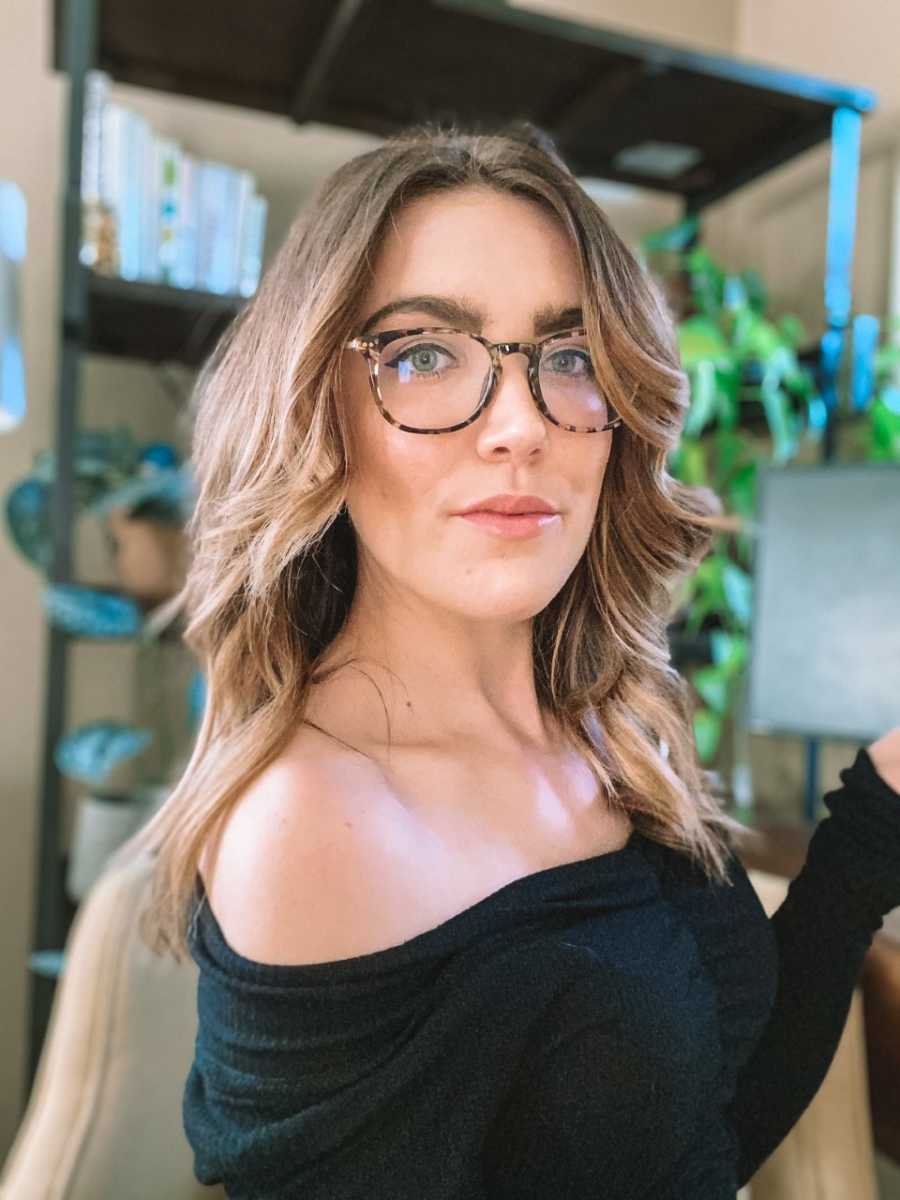
As far back as I can remember, I had stretches of my life where I felt sick almost constantly. The earliest I remember was around age 12 or 13. Eating nearly anything made my stomach hurt, and feeling unwell became my normal. That’s when my mom first started taking me to doctor appointments, desperate for answers. But time and time again, we were brushed off. Tests were minimal, and the conclusions were always the same.
‘It’s probably just anxiety.’
‘It’s just teenage girl stuff.’
‘It looks like it might be an eating disorder.’
‘Let’s try therapy and see if that helps.’
Not once did a doctor truly validate my pain. Thankfully, my mom never stopped believing me, even when no one else did. Still, there was only so much she could do.
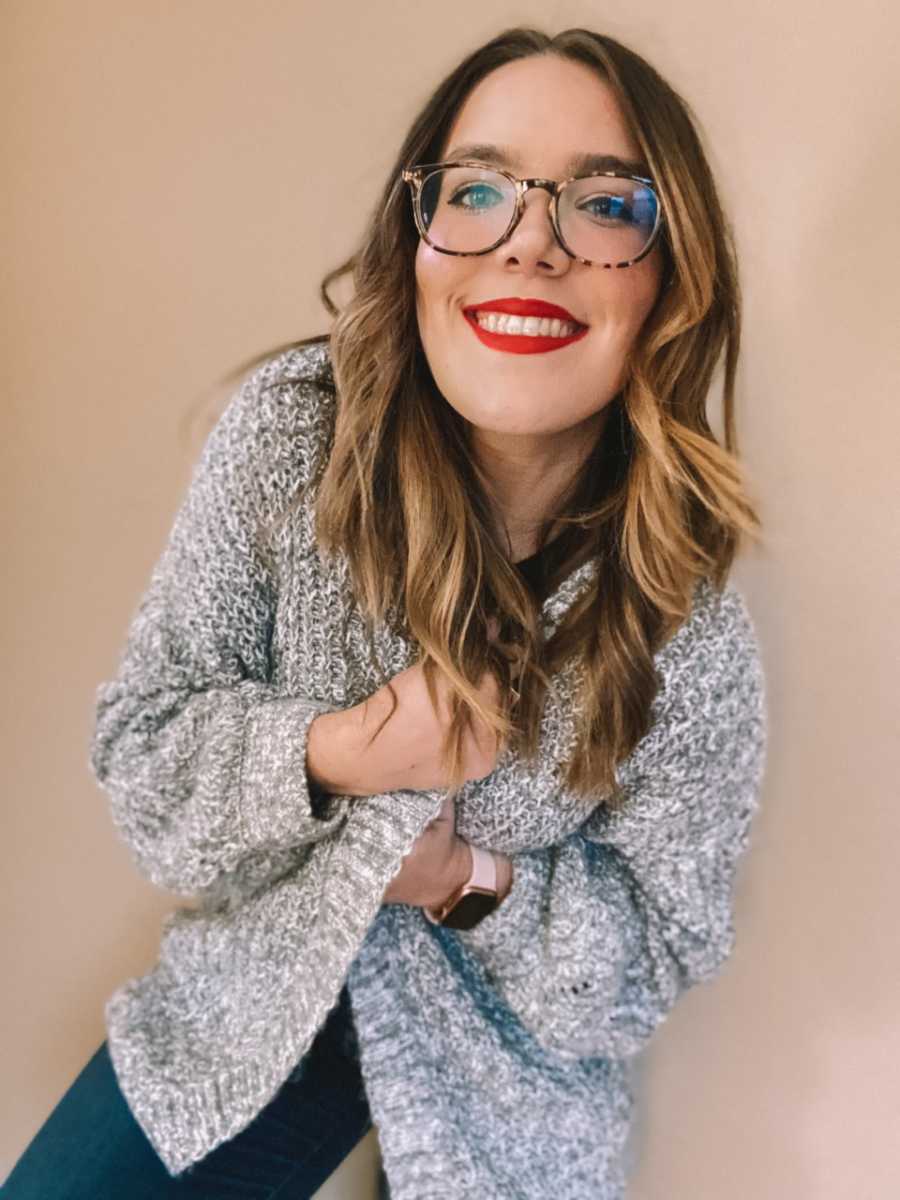
As the years passed without answers, I learned how to cope. I learned how to live with daily pain as if it were normal. I went away to college—leaving San Diego to attend the University of Oregon—and slowly accepted the possibility that this might just be how I would feel forever.
A few years later, my symptoms worsened significantly. Once again, I was met with doctors who ran limited tests and told me it was stress or all in my head. Frustrated and desperate, I took matters into my own hands and made strict dietary changes. For a short while, they acted like a band-aid, masking something much deeper.
Now, here’s where the story gets a little strange—but stay with me.
Growing up, I knew I would eventually need jaw surgery because of how my jaw was formed. Once my bones stopped growing, braces and corrective surgery were inevitable. By my sophomore year of college, it was finally time to start that process.
Two years later, during my senior year, I was ready for surgery. I scheduled it over winter break, thinking it would be enough time to recover—something I now know was wildly optimistic. The surgery lasted five and a half hours. I woke up with my mouth wired shut, heavily medicated, and in more pain than I had ever experienced.
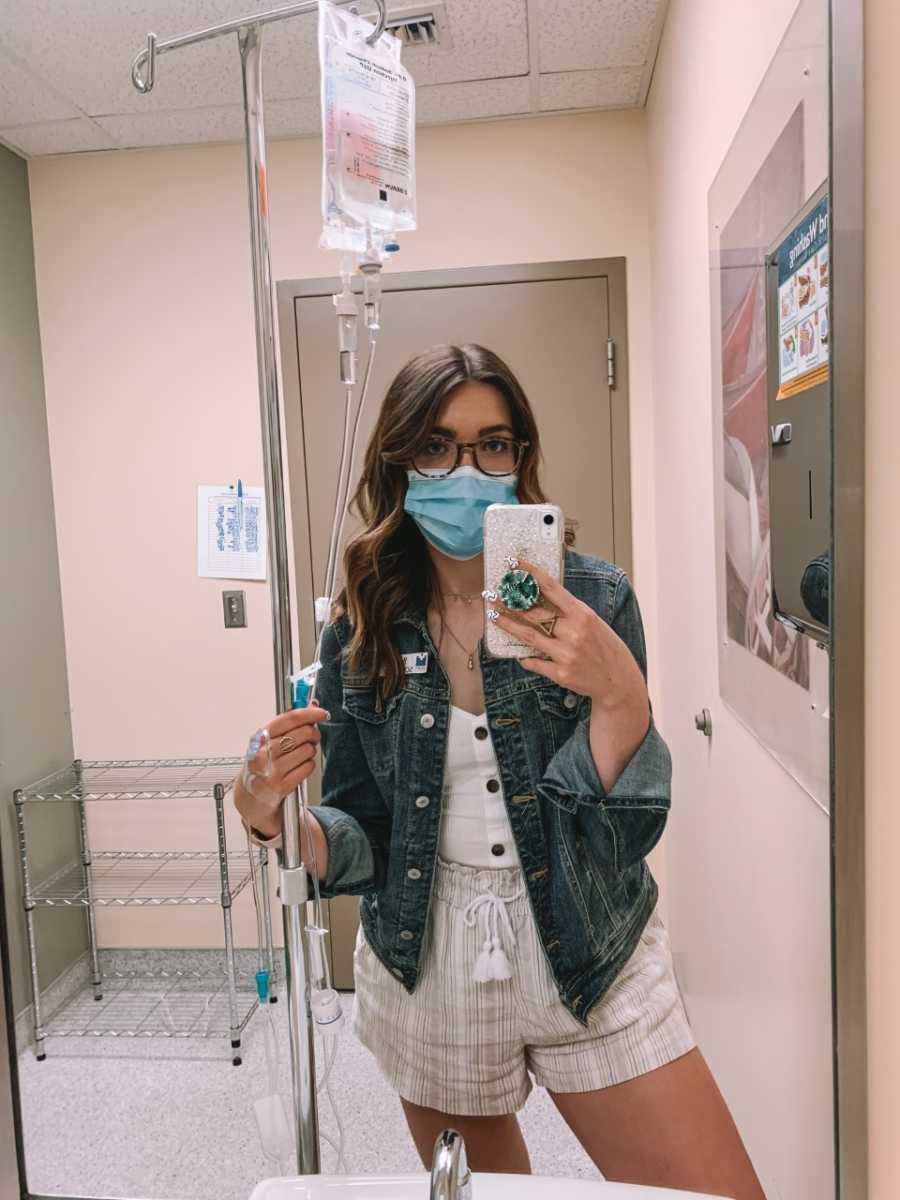
The physical trauma and extreme stress from that surgery triggered my first life-threatening ulcerative colitis flare. At the time, I didn’t know that’s what it was. I only knew I was in unbearable pain. I couldn’t walk. I couldn’t keep even a sip of water down. My parents rushed me to the emergency room, where I was admitted overnight and given my very first colonoscopy the next morning. The fact that I’d never had one before still amazes me.
That’s when I heard the words that are permanently etched into my memory:
‘You have ulcerative colitis, and it’s one of the worst cases I have ever seen. You’ll probably leave here without your colon—it’s that bad.’
I spent the next three weeks in the hospital, pumped full of steroids, iron, blood transfusions, and the biologic Remicade, which ultimately saved my life and brought me into remission. When I was discharged, I had to withdraw from the next term of school and stay home to begin this new chapter of my life as Tati with ulcerative colitis. As I clicked “withdraw from term” from my hospital bed, I made myself a promise: no matter what, I would finish my college degree. And I did.
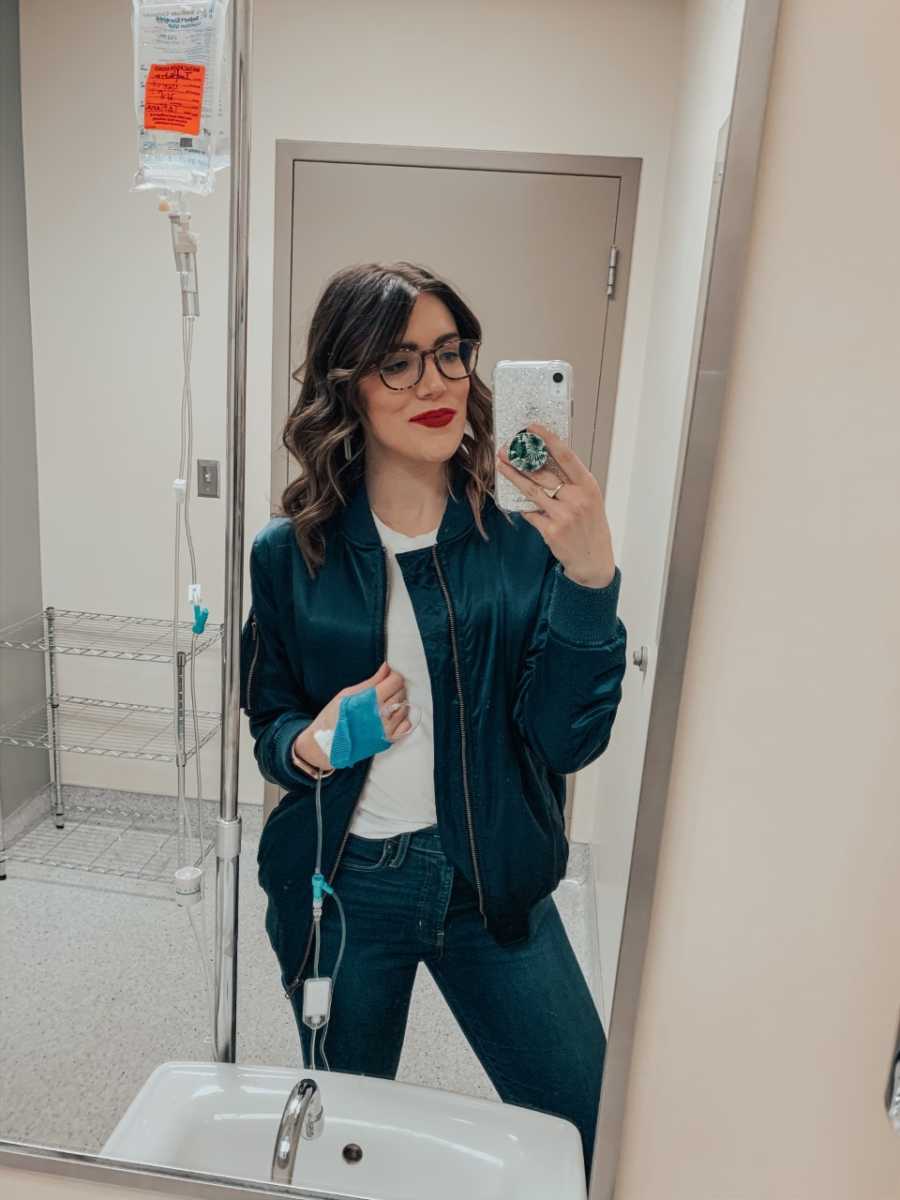
As the months passed and I slowly regained my strength, I was forced to slow down in ways I never had before. At the time, I hated it. I resented my disease for leaving me bedridden, isolated, and feeling—at least in my own mind—unlovable. I was angry at my body and at myself. I felt broken, stripped of confidence and self-worth, nowhere near accepting that this illness would be part of my life forever.
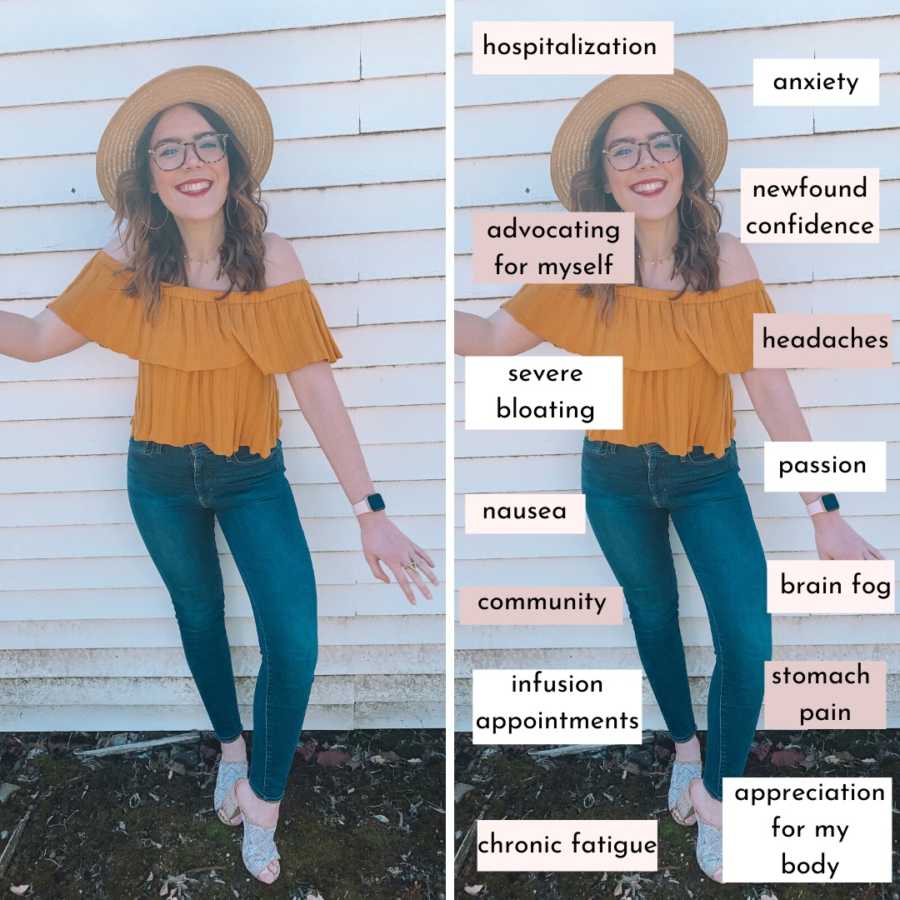
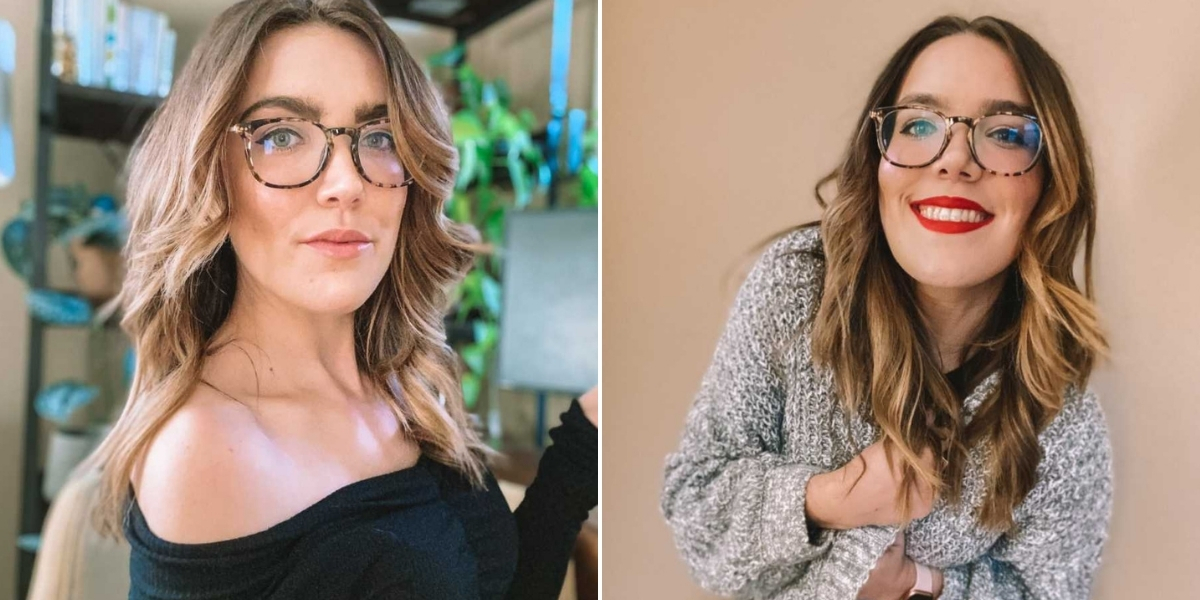
Eventually, I made the decision to choose myself. I chose to love myself and accept my chronic illness diagnosis, and that choice led me on a healing journey that changed my life. I built a relationship with myself that I now deeply cherish. I never wanted any womxn to feel alone in their healing, so I became a certified coach to help womxn with chronic illnesses learn how to love themselves alongside their diagnoses. Through that work, I found purpose, passion, community, and friendships in the very thing that almost took my life.
December 17, 2015—the day I was diagnosed—changed everything. At the time, it felt like the end of the world, like my life was over. I thought everything I had hoped for was gone. I had no idea then that it was actually just the beginning.”