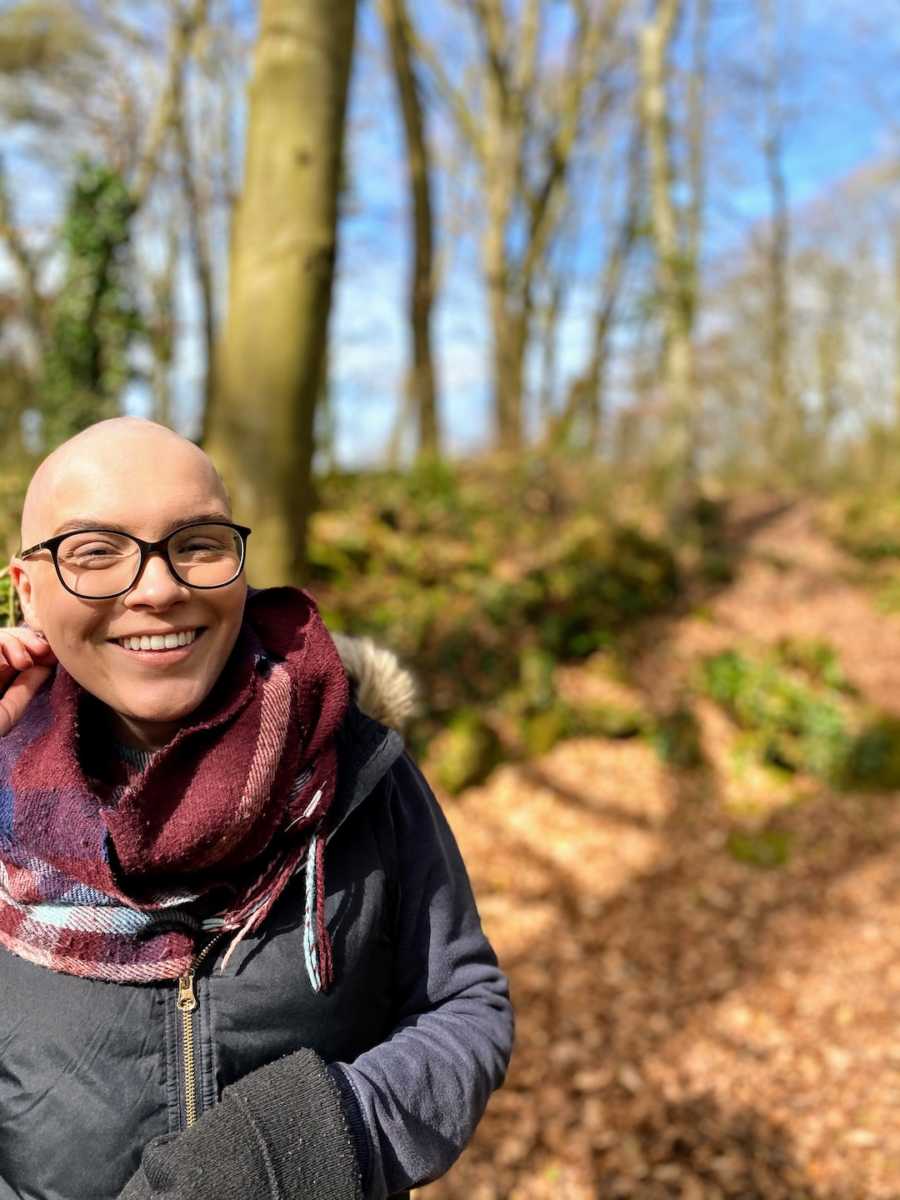
I had two nicknames before I was bald—Velma from Scooby-Doo or Edna Mode from The Incredibles. This was all because of my signature brunette bob, my fringe, and my big glasses. Losing my hair felt like losing a piece of who I was, but taking control of my alopecia eventually became one of the best decisions I made—for my mental well-being, and surprisingly, even for my confidence.
I first noticed a tiny bald patch when I was 19. I had been helping a friend with an art project where she painted a canvas on my back. Once finished, she photographed it and uploaded it straight to Facebook. Later that night, scrolling through the pictures, I noticed a small circular patch staring back at me. At first, I had no idea what it was—I thought maybe my hair had just been tied too tightly.

Curious and a little worried, I searched online for “random bald patches on head,” and alopecia kept coming up. I didn’t really understand it, and to be honest, at first, it didn’t bother me. Growing up, I had thick brunette hair, long enough to experiment with every hairstyle imaginable—braids, curls, space buns, high ponytails. I loved how it moved when I danced, or how easy it was to throw up in a messy bun for work. I had always taken care of it, washing it regularly, getting haircuts, and avoiding excessive dye. So seeing a bald patch was a shock—but not one I let stop me from living normally.
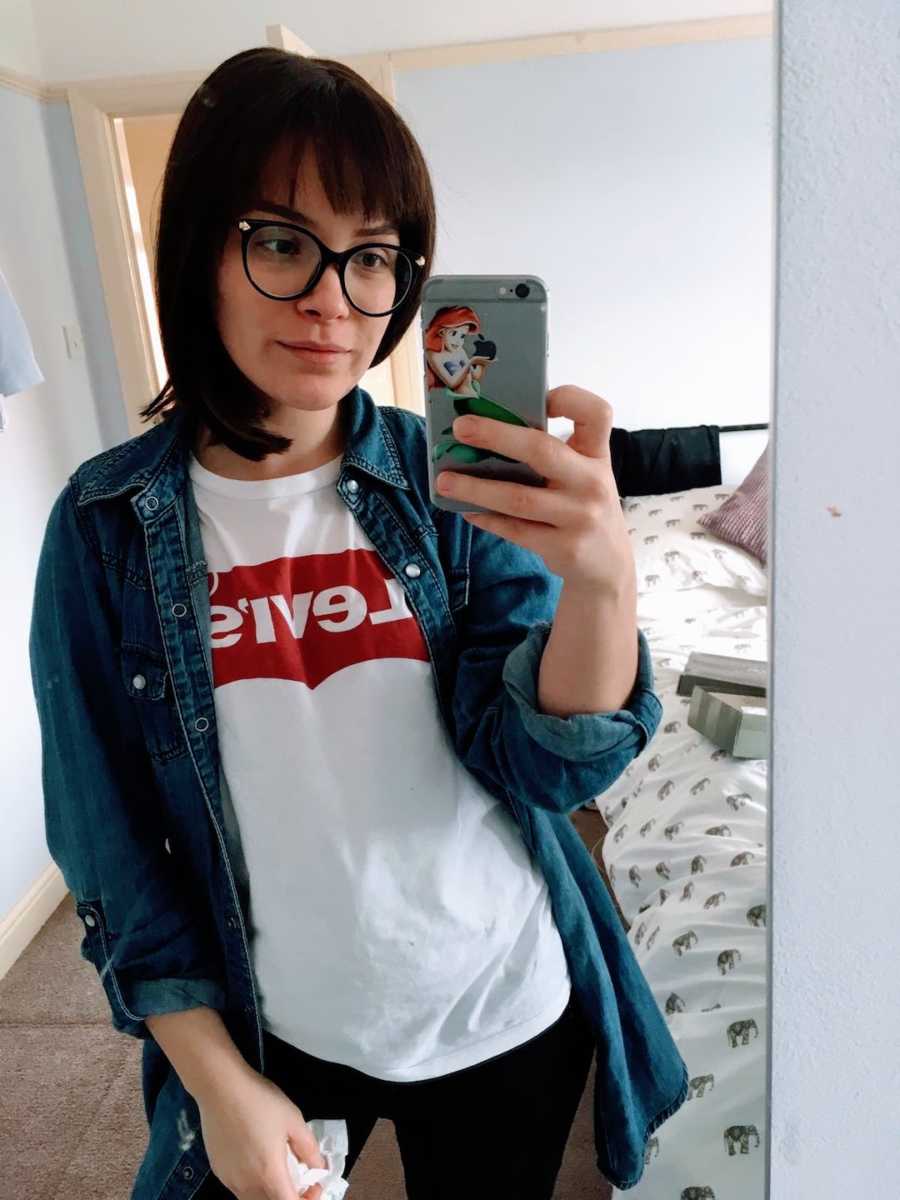
Eventually, my mom and I went to see my doctor. He told us, “It’s just a little hair loss, usually called alopecia. I’d say it’s the size of a 50p piece. I can’t see it getting worse, but we’ll keep an eye on it.” Months later, I noticed thinning at the base of my neck, and over time, the patches seemed to move around my scalp.
As it worsened, I started seeing a trichologist who also offered wig fittings. I didn’t feel I needed a wig yet, but my mom and I were curious. The visits quickly became our Saturday routine. She explained what trichology was, how she could help, and we’d chat about my hair’s journey so far. Those afternoons became comforting, almost like a ritual of care in a small village salon.
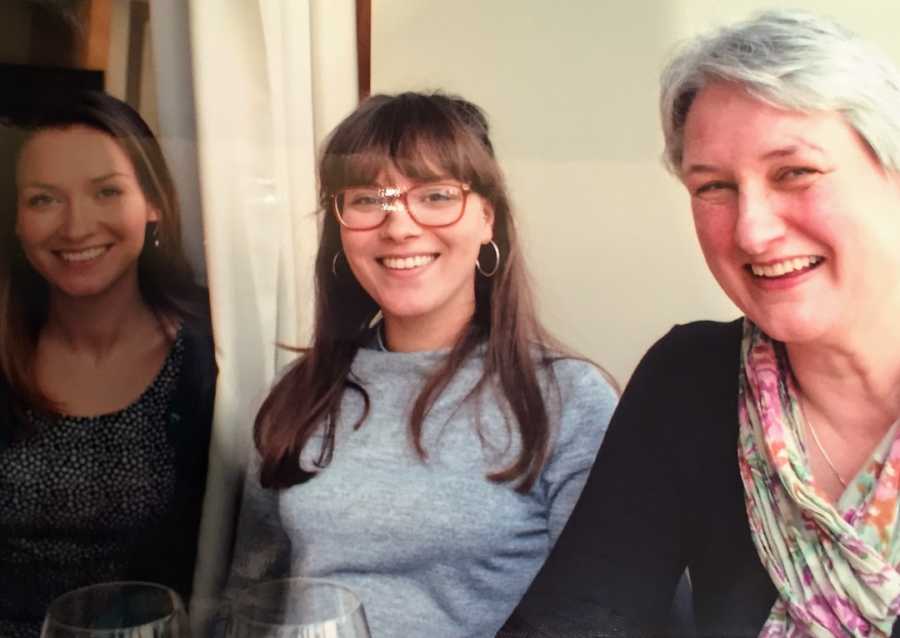
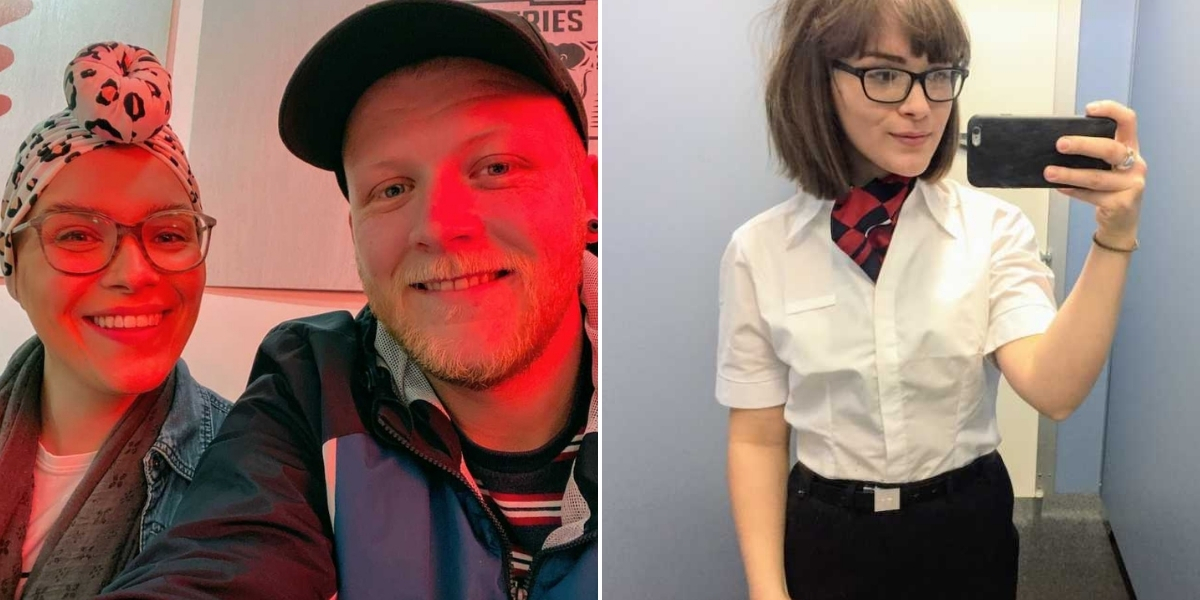
A year into this routine, I went through a massive career change—I applied for British Airways cabin crew and got an interview. My parents helped me pick the perfect outfit and style my hair. We went with a classic doughnut hairstyle, fixed in place with careful sprays. The drive to Heathrow was under two hours, and I avoided the headrest to preserve every strand. Three days later, I got the job—the opportunity of a lifetime. Traveling the world, meeting new people, seeing places I’d never imagined—it was thrilling. But then came the panic: what about my hair?
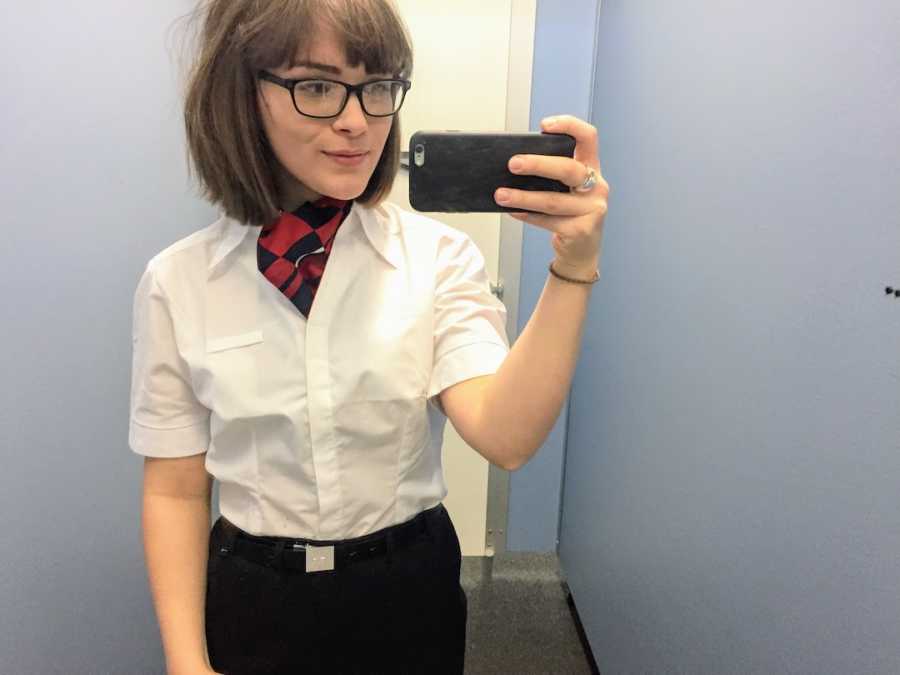
As my start date approached, I asked my hairdresser to cut my long hair into a bob, hoping it would cover bald patches around my neck and ears while fitting the cabin crew image. For a while, it worked. But in the last six months of flying, it became harder to manage. Thankfully, I had an understanding manager who allowed me not to wear the uniform hat for medical reasons. Still, I often lied to other crew members when asked, saying I left it in the car. Occasionally, I would tell the truth, answering endless questions about alopecia: “Does it hurt?” “Is it stress-related?” And almost every time, someone would joke, “Is this why you have a bob—to look like Velma?”

One moment still sticks with me. On a flight, another crew member said, “I wish I had alopecia so I wouldn’t have to wear this stupid hat.” I froze, too shocked to reply, and politely declined her social media requests afterward.
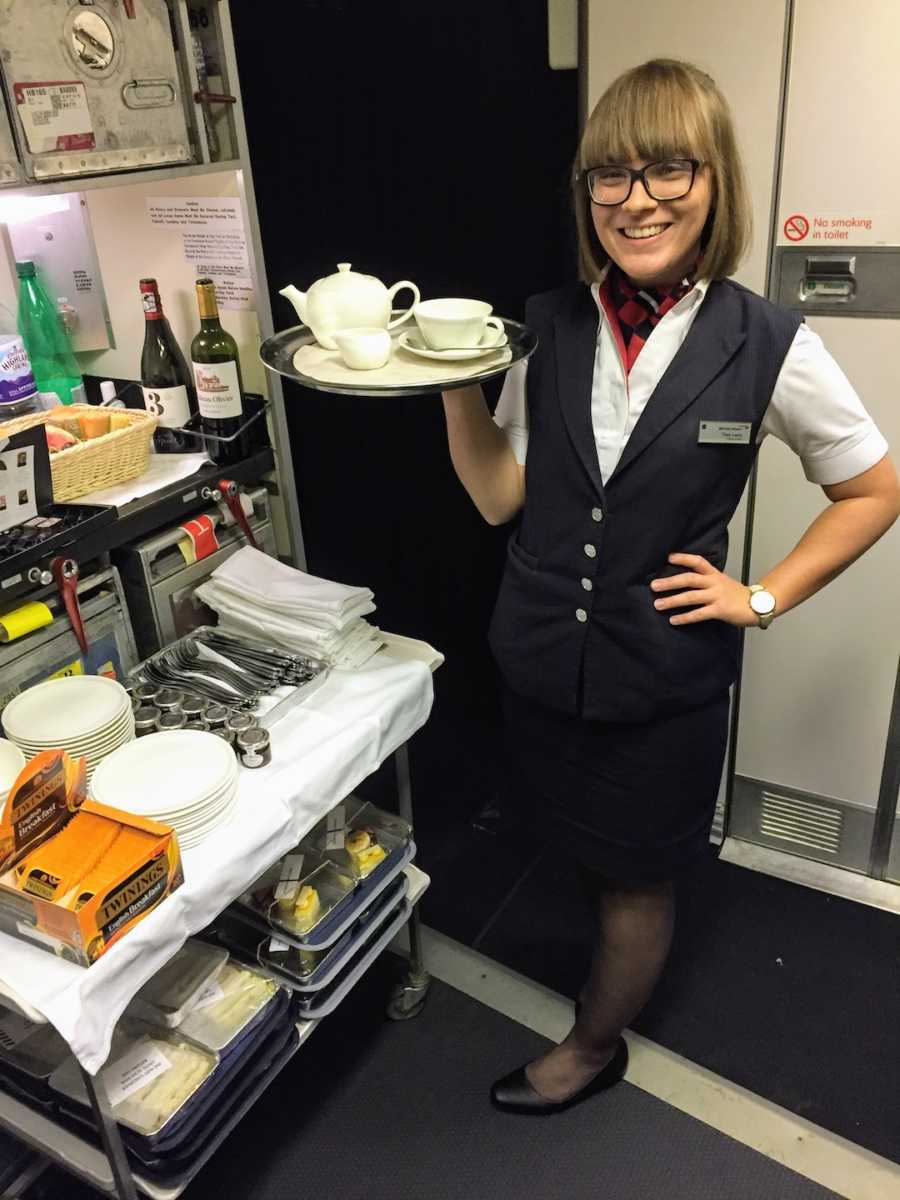
I left flying in Christmas 2017, tired but filled with memories of the world I’d seen. I hoped returning to a routine might help my hair grow back. My bob remained, thick in some areas, thin or bald in others. By 2018, hair loss was progressing. I returned to trichology appointments, explored every treatment, diet change, or organic serum, but nothing worked. Blood tests always came back clear. By early 2019, I was finally prescribed steroid cream while waiting over a year for a dermatologist appointment. The stress was overwhelming, made worse by insensitive comments from my ex-partner. I felt alone, isolated, and frustrated—sometimes chocolate and kind words couldn’t fix that funk.
Finding control in other ways helped. At 23, I decided to get braces—if I couldn’t control my hair, at least I could improve my smile. Then, finally, in 2019, I saw a dermatologist and started steroid injections. The regrowth was slow, but it didn’t matter—the gray hairs that returned were still hair. I attended every appointment, committed to trying everything, until COVID canceled everything in March 2020.
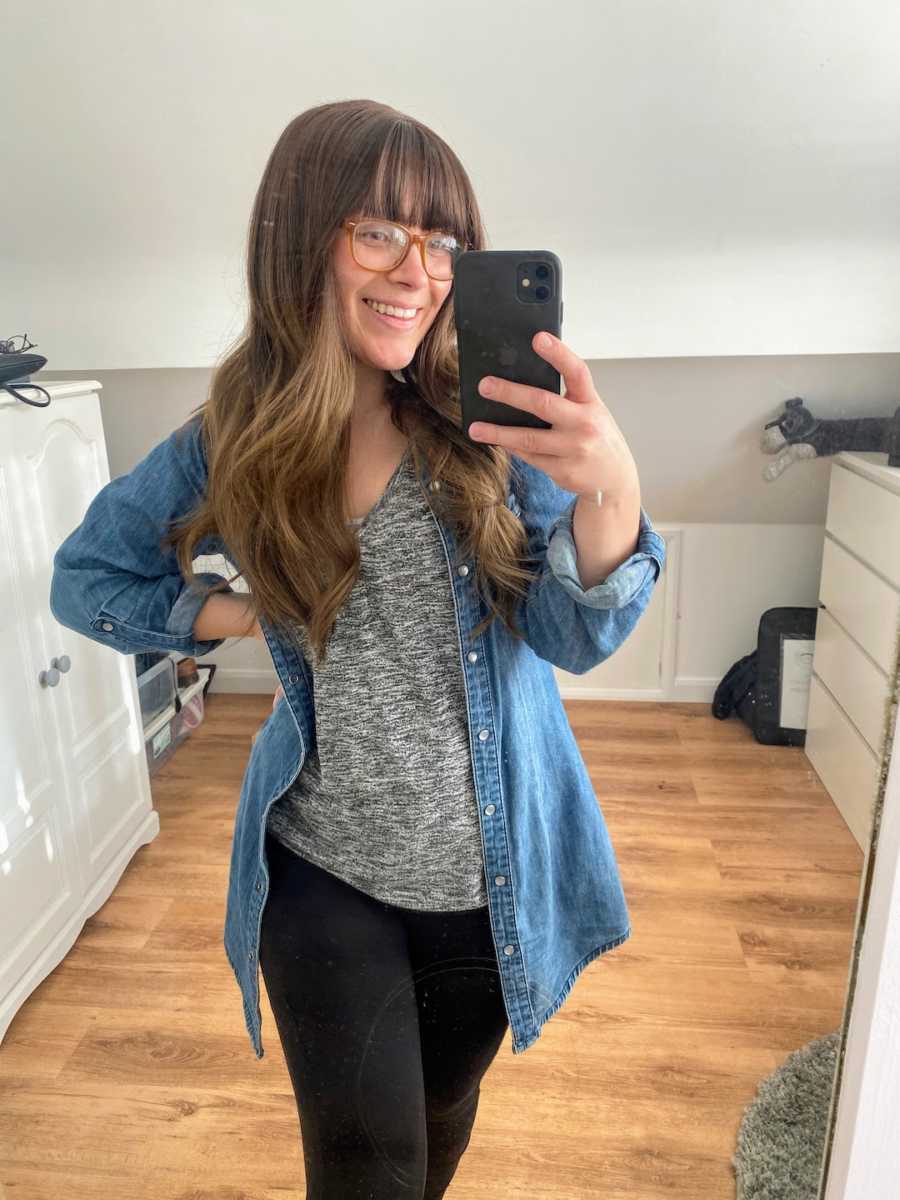
By summer 2020, my hair was at its thinnest. Hair fell on my pillow, in the shower, even while cooking. I bought turbans from Amazon, which helped immensely, though they didn’t solve the underlying problem. Within three months, I lost over half my hair. By February 2020, I realized I couldn’t continue like this. After tears and support from my partner Louis and another local woman with alopecia universalis, I decided to shave my head. Saying goodbye to Velma/Edna Mode was hard, but it was the right decision.
2020, despite COVID, turned out to be the best year of my life. I met Louis, who accepted me immediately and still greets me every day with, “Good morning, beautiful lady.” Alopecia is tough, for anyone, female or male. But the community is incredible. Reaching out, sharing experiences, and connecting with others gave me courage. Now, I embrace this new chapter, showing off wigs or turbans, and slowly starting conversations about hair loss, confidence, and mental health. Losing my hair took away something familiar, but it gave me something even more valuable—self-acceptance and resilience.