Becoming paralyzed is an incredibly traumatic experience, especially when it happens as a kid. The uncertainty, the self-consciousness, the embarrassment, and the constant questioning of what your life will look like—these feelings all compound the already challenging, awkward years of adolescence. Being stared at, asked personal questions, and having people assume things about you quickly becomes the new normal. Here’s a glimpse into my journey.
My name is Doug Galica. At the age of 13, I was injured in a hunting accident and became a T11/12 complete paraplegic. That was over 23 years ago. Today, I work as a Patent Classification Specialist under contract with the United States Patent and Trademark Office (USPTO). Outside of work, I love traveling with my wife, playing basketball, hunting, fishing, snow skiing, and a variety of other hobbies that keep me active and engaged.
December 20, 1997, was the first day of muzzleloader season in Maryland, and my dad and I were up before sunrise to meet a group of friends for a day of hunting. That late-season hunt involved deer drives—groups of hunters walking through the woods to move deer toward “standers” like me, who were positioned where the deer were most likely to travel. During the second drive, a group of deer appeared ahead of me but slightly to my left. Before I could react, a gunshot rang out, and I was suddenly falling to the ground.
Instinctively, I unzipped my coveralls and lifted my shirt—and saw a hole in the left side of my chest. Panic set in as I began yelling for help. My buddy came running immediately and, realizing what had happened, began yelling too. Soon, more friends, including my dad, arrived. I realized I couldn’t feel or move my legs—they were just heavy, lifeless weights. One of my legs slipped off the log I was laying beside, and everyone hoped it was just me trying to move, but it wasn’t. My friend ran to the nearest house to call 911, while another held me propped in his lap. We all tried to remain calm and keep me alert until EMTs, firemen, and first responders arrived.
The injury’s severity meant that they couldn’t lower a basket from a helicopter through the trees. Instead, they carried me out on a firemen’s jacket, loaded me into a pickup truck, and drove to a mountaintop where a helicopter could land. I was sedated for the short flight to the first hospital, where I was stabilized and able to see my parents briefly before being transferred to Johns Hopkins Hospital in Baltimore, MD. My mom, terrified of heights, insisted on riding along with me.
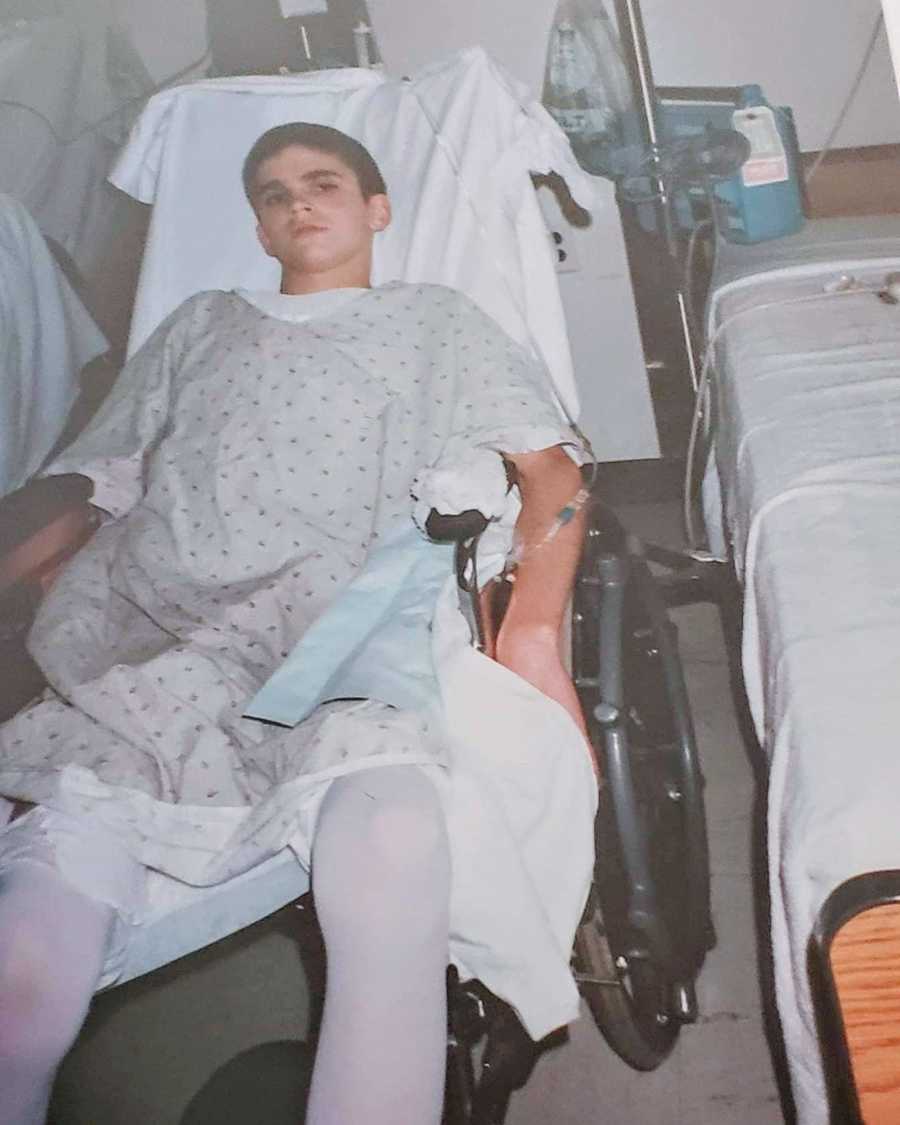
After surgery, we learned the bullet had struck my T11/12 vertebrae, and bone fragments had severed and destroyed my spinal cord, leaving me paralyzed from the waist down. But my fight was far from over. Five days later, on Christmas night, my lung collapsed again, my temperature spiked to over 104, and medical staff spent hours trying to reinflate it—including pounding on my right side, which already had a broken rib, a chest tube, and an incision. The procedure I dreaded the most was having a suction tube inserted up my nose into my lungs every 15–30 minutes to remove mucus.
Even after my lung stabilized, complications continued. The bullet caused bacterial meningitis, requiring a blood transfusion and intensive care. Slowly, things began to improve. After an 11-day hospital stay, I was transferred to HealthSouth Rehabilitation Center in Morgantown, WV, on January 1.
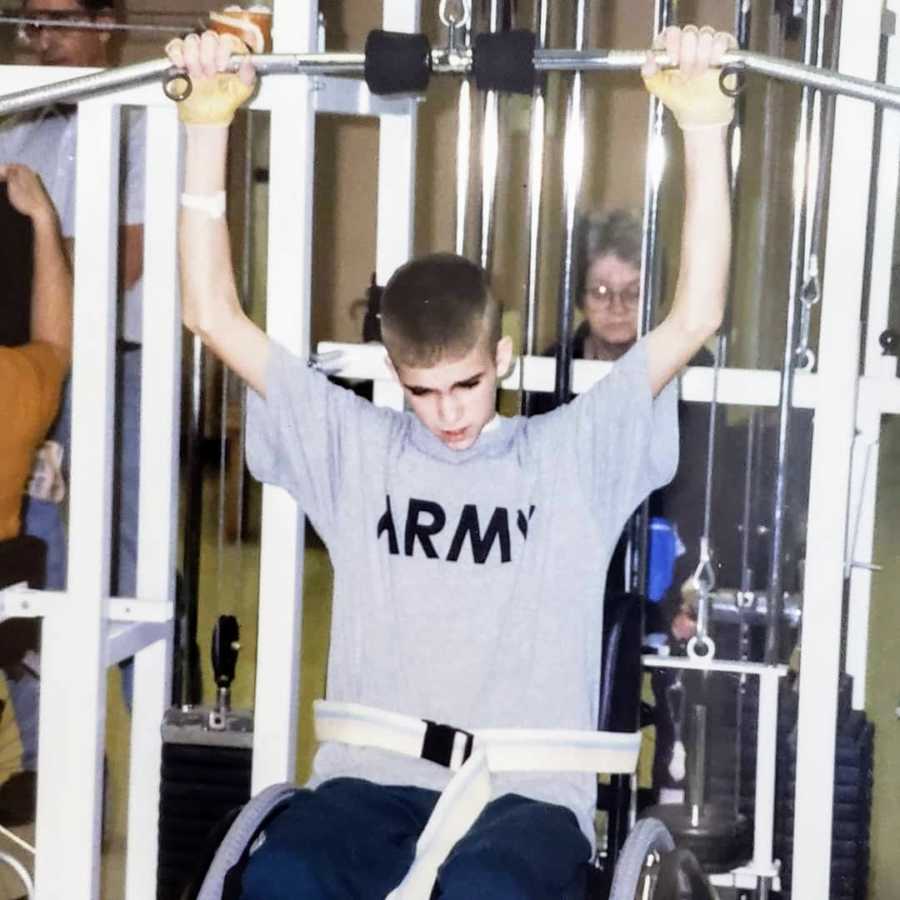
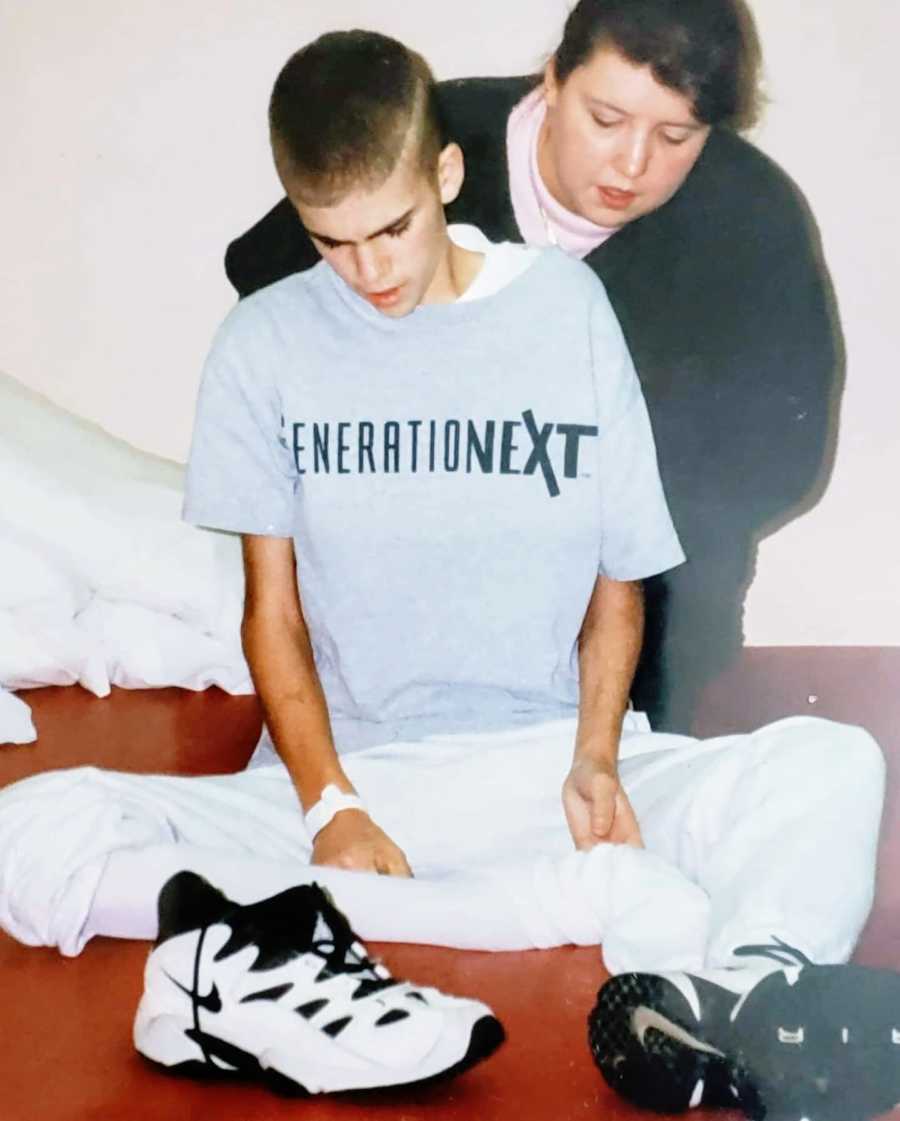
Rehab began immediately, despite my broken rib, internal injuries, fractured vertebrae, and complete spinal cord injury. I had lost all muscle mass, and with no feeling below my waist, I had to relearn basic tasks: sitting up, rolling over in bed, dressing myself, and even putting on socks, which at the time felt impossible and took over an hour. I spent over six weeks in inpatient rehab, practicing balance with simple activities like playing cards on the edge of a mat, regaining strength through therapy, walking with KAFOs, swimming, and slowly rebuilding my life. By February 14, I had returned to school, continuing outpatient therapy three days a week for an entire year. My family, friends, and support system were essential in helping me navigate one of the biggest hurdles of my life.
I’ve always credited my mindset and positive attitude to my uncle, who became a quadriplegic at 16. At 13, seeing a glimpse of his life taught me gratitude and perspective—it could have been much worse. But it wasn’t easy. I had moments of doubt and days where it felt like giving up would be easier. Anyone in a situation like this experiences such struggles, but it’s crucial not to stay trapped in that mindset. I was determined, hardheaded, and willing to put in the work to prove I could achieve anything I set my mind to.
Back then, the internet wasn’t what it is today—no social media, no resources for adaptive sports or rehabilitation guidance. I learned through trial, error, and sheer determination. Living in a rural area kept me outdoors, riding four-wheelers, hunting, fishing, plowing snow, and enjoying nature, which strengthened my chair skills and physical strength.
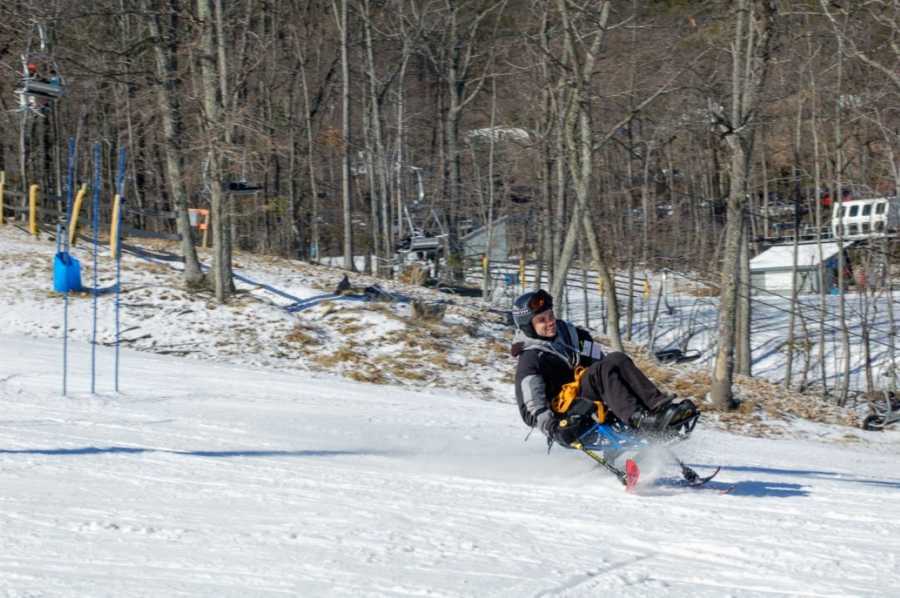
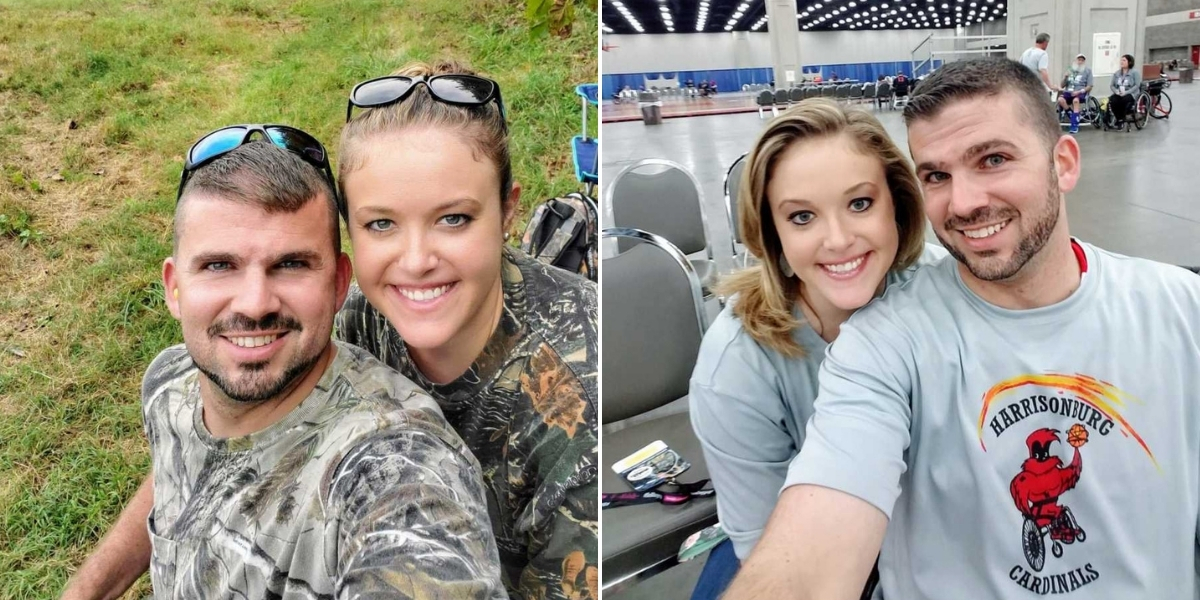
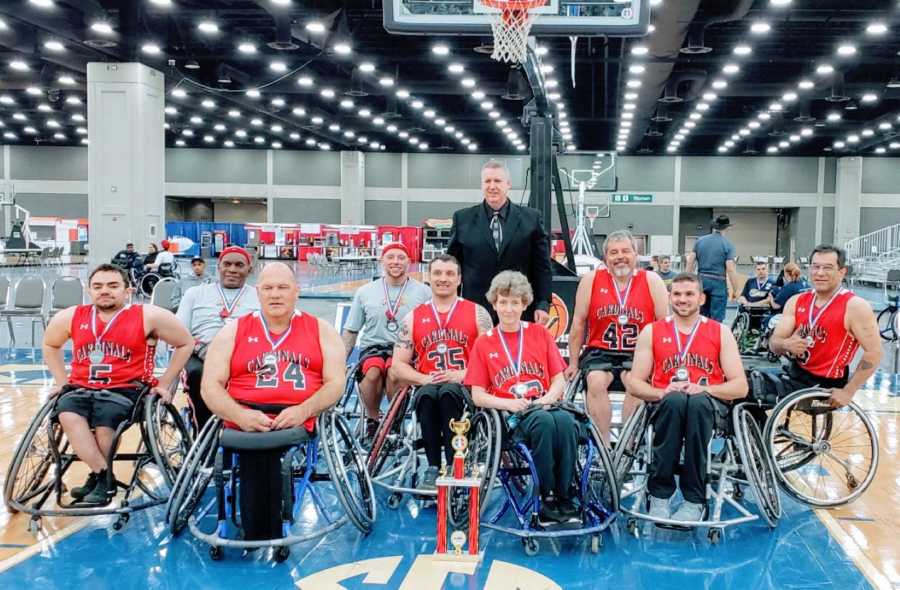
Years later, after college and moving to Virginia, I discovered adaptive snow skiing at a local resort. On my first day, I fell in love with the thrill and adrenaline, even tackling black diamond trails without tethers. It was exhilarating but bittersweet, realizing all I had missed in the first 15 years post-injury. Through Therapeutic Adventures, I also experienced sled hockey and later found a local wheelchair basketball team. The first practice left me exhausted, but I pushed through. That same team, the Harrisonburg Cardinals, went on to place second in the National Championship the following year.
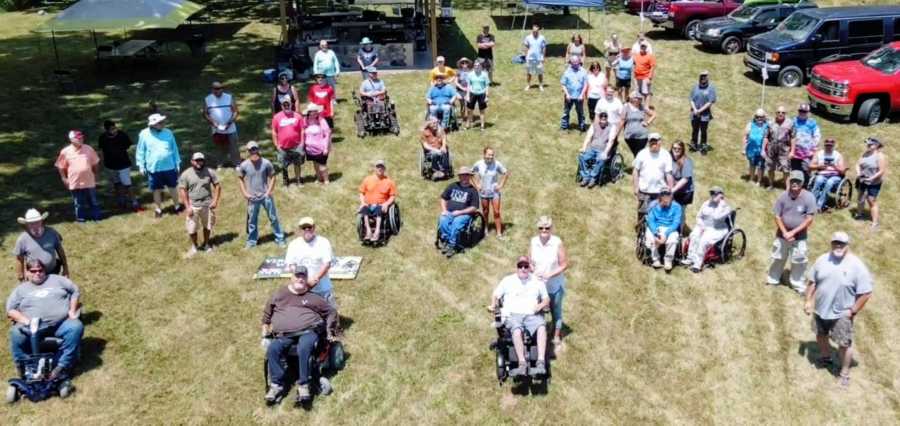
My passion for the outdoors never faded, despite the accident. I returned to hunting whenever possible and later joined a nonprofit helping others access hunting and fishing. Within a year, I became Vice President of our chapter, helping others enjoy the outdoors through Virginia Wheelin’ Sportsmen.
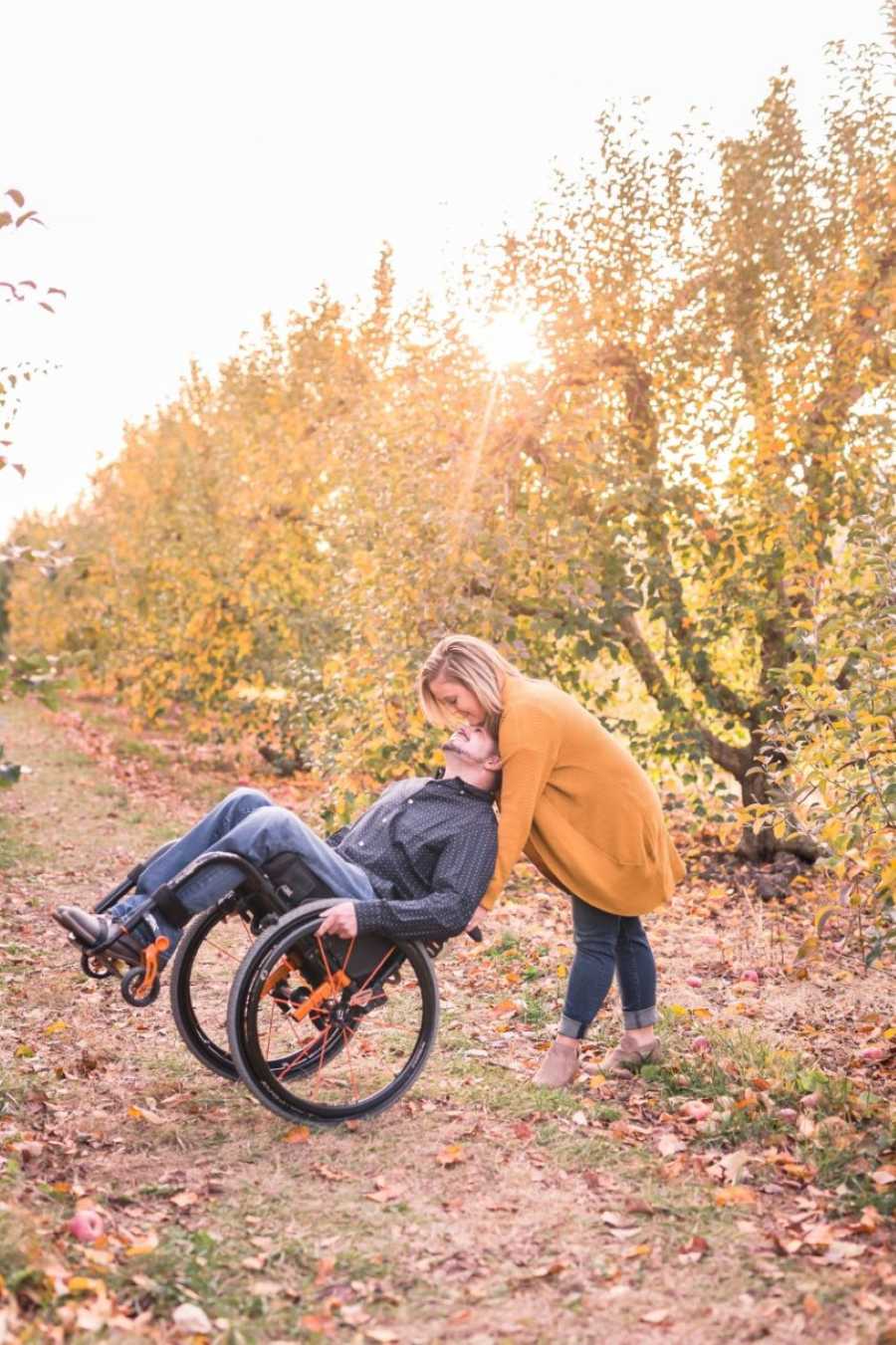
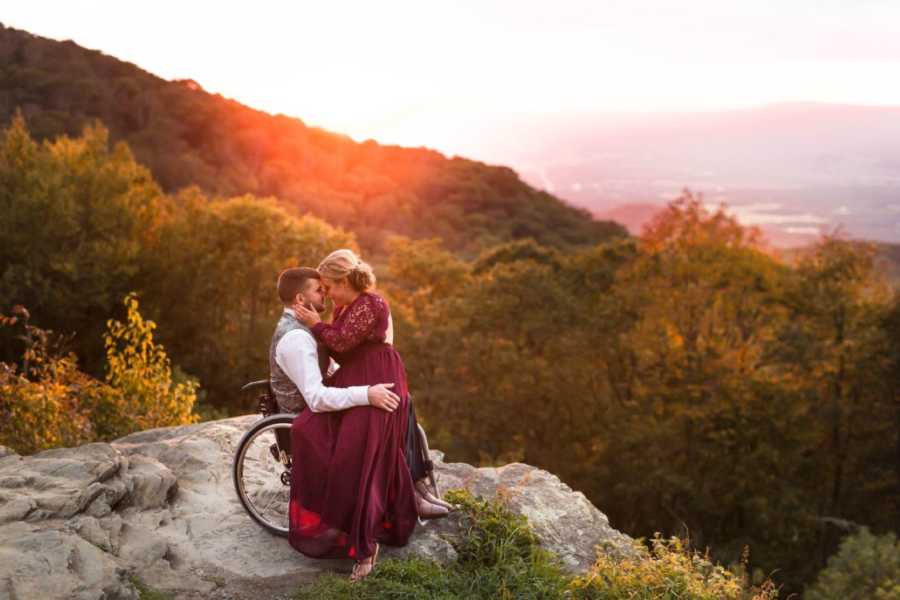
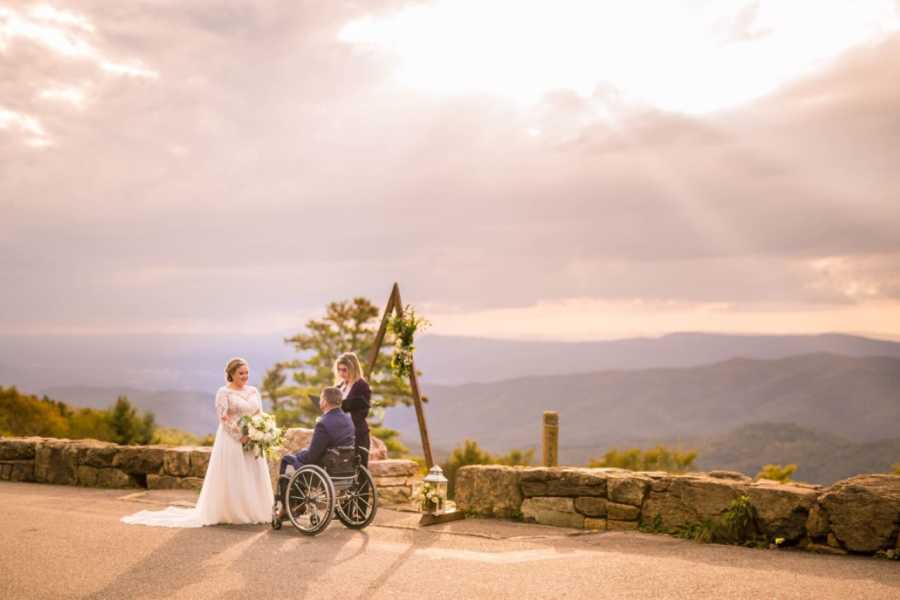
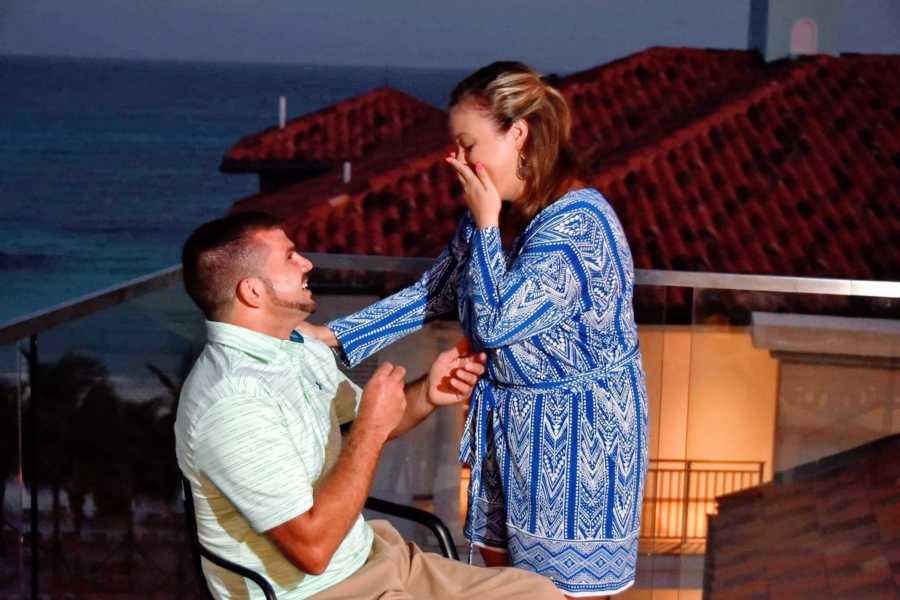
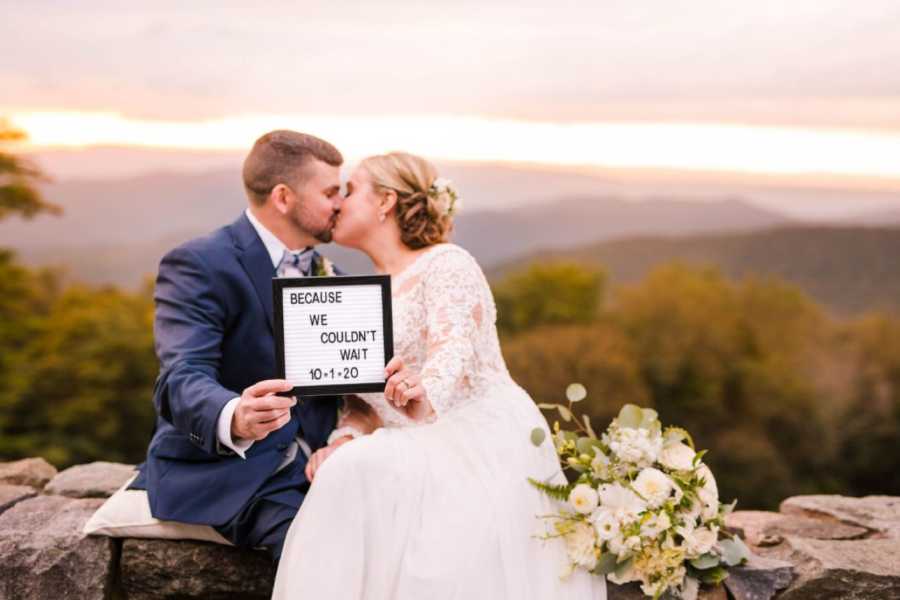
In 2017, I was asked out by my beautiful neighbor—a shy man like me suddenly navigating romance. She quickly learned what caring for me entailed, including accompanying me for surgery. Since then, we’ve traveled extensively, celebrated our engagement in Barbados, and planned a wedding in Bar Harbor, Maine. Our ceremony took place in 2021 in the Blue Ridge Mountains, and we’ve since begun our fertility journey, dreaming of starting a family.
Today, I hope to raise awareness about adaptive sports, travel, and opportunities for those facing challenges like mine. Accessible vacation spots, adaptive activities, and resources are often scarce, and many hesitate due to lack of information or fear. My wife and I make it a point to explore, learn, and share knowledge to make travel and recreation more accessible for everyone.
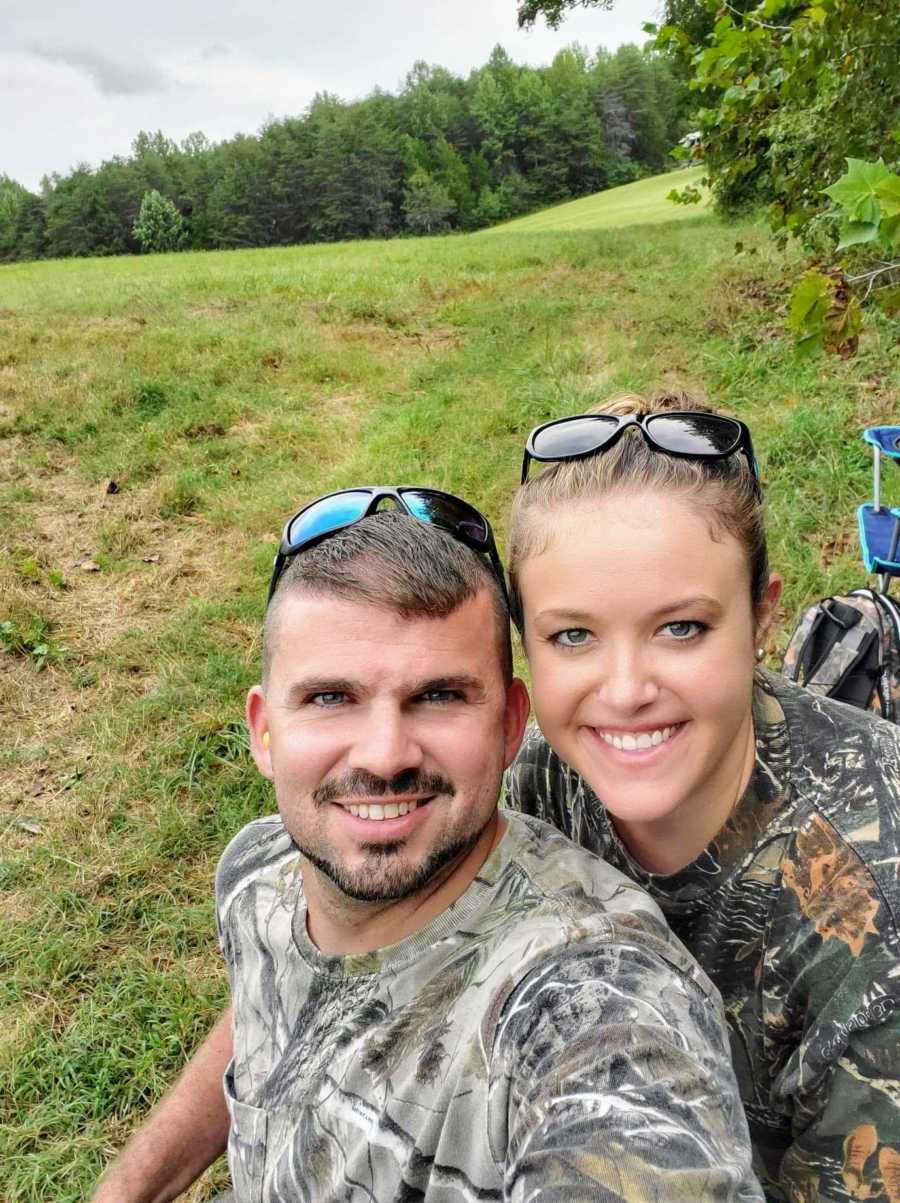
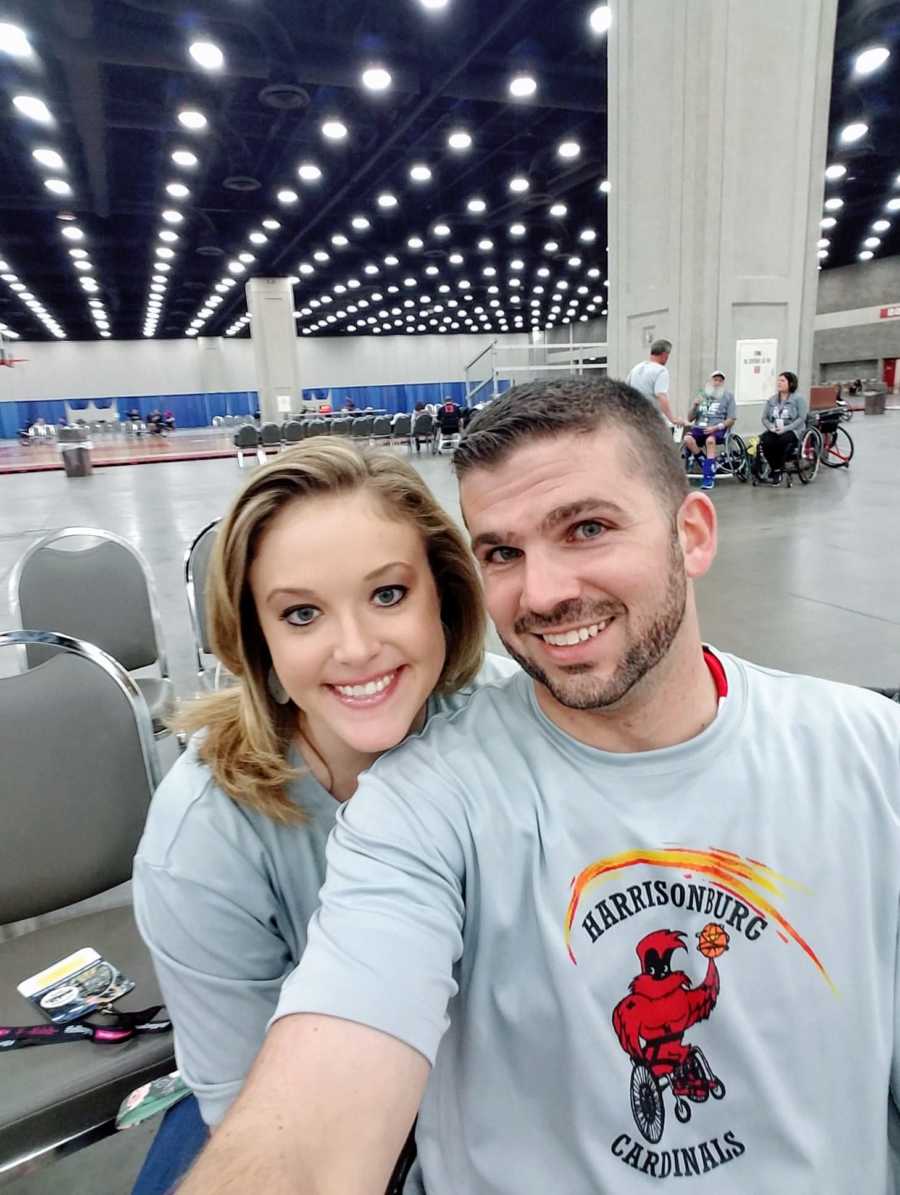
My journey has been challenging and sometimes embarrassing, but it has shaped me into the person I am today. I’ve proven that assumptions about people in wheelchairs are often wrong. It hasn’t been easy, but it has been worth every effort, and I look forward to making an even greater difference in the next 23 years.